Every course you can play - from a Blue Ridge mountaintop and a Flynn classic in the Alleghenies to two Mike Strantz fever dreams in the Tidewater. Public, resort and semi-private only: if a course will not sell you a tee time, it is not on this list.
15Courses you can play
364Golf courses statewide
3Pete Dye designs on the list
1892Oldest first tee in America, still in use
Virginia golf spans the whole American songbook in one state. In the west, the Blue Ridge and the Alleghenies hold a mountaintop resort course and the two Homestead classics Sam Snead grew up on. In the middle, hunt country and the Richmond suburbs hide a gentle Pete Dye and a Fazio built to grow the game. In the Tidewater, Williamsburg stacks a Jones family double beside a Dye tournament course, and two Strantz designs turn flat coastal land into Ireland. These are the fifteen bookable courses worth planning a trip around.
How we chose them
Our fifteen follows Golfweek's 2026 Best Courses You Can Play panel for Virginia - Primland first, the Cascades second, the Golden Horseshoe Gold third - cross-checked against Golf Digest's Best in State list, where the same names lead the public-access entries, and GOLF Magazine's Top 100 Courses You Can Play, which counts Primland, the Golden Horseshoe Gold and Full Cry among its national selections. Access calls, stated plainly: Primland, both Homestead courses, the Golden Horseshoe Gold, Full Cry and Kingsmill book through their resorts; Poplar Grove, Viniterra and Stonehouse pair memberships with public tee times; every other course sells daily-fee tee times to anyone. No green fees are published on this page, because Virginia's top end prices dynamically by season and stay package. No Virginia course is in our national top 25 yet: Primland, the state's consensus No. 1 and a fixture on national public lists, holds the strongest claim, and it is the leading candidate for a future national list.
Access key: Public anyone can book · Resort bookable with a stay or as a resort guest · Semi-private members plus public tee times
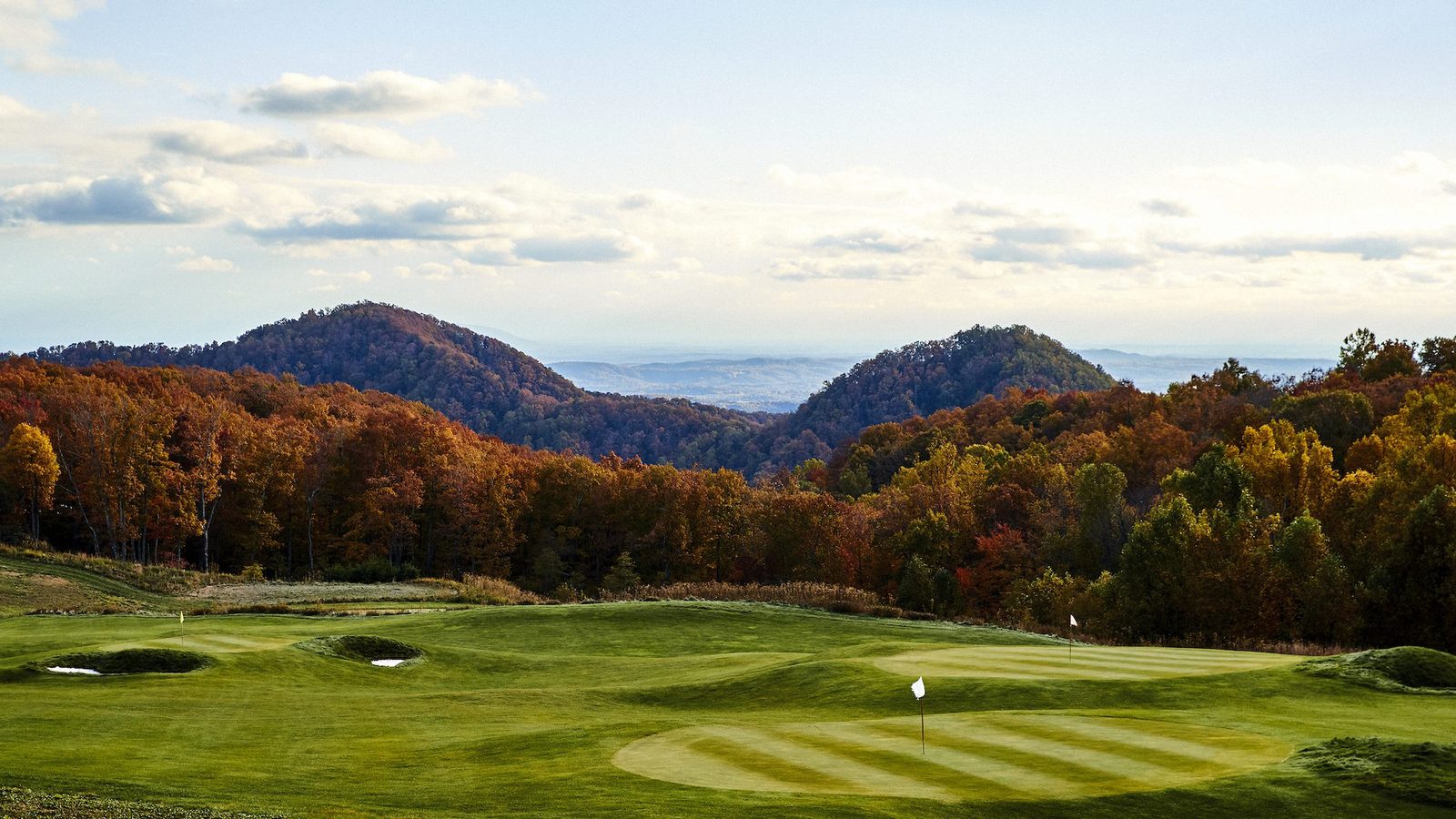
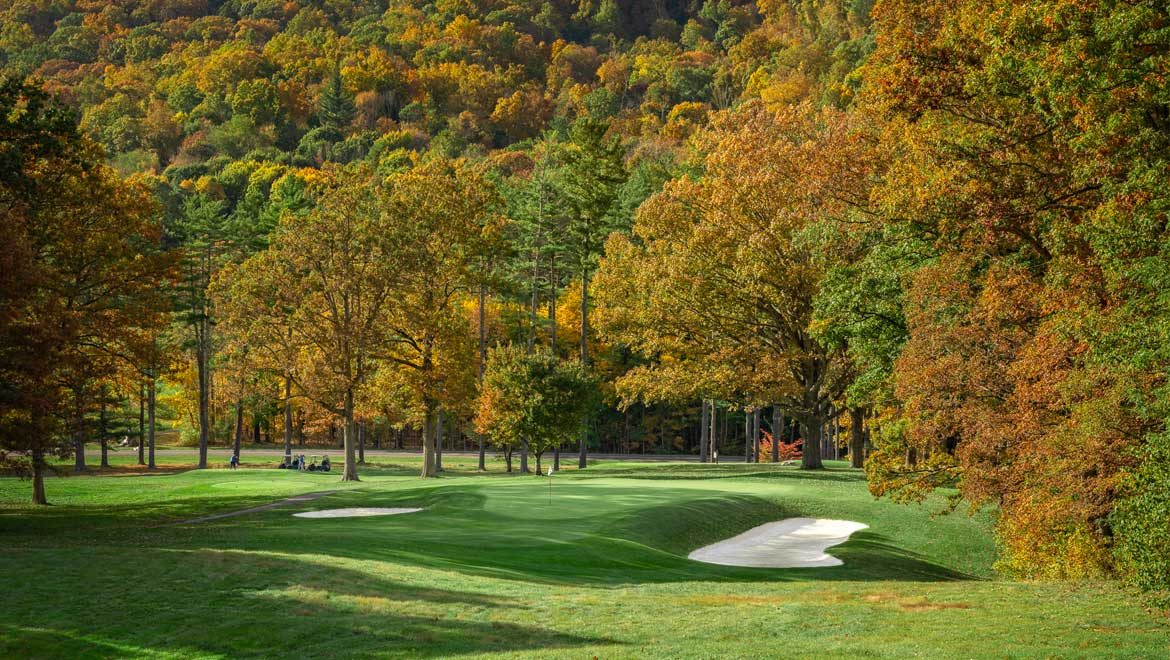
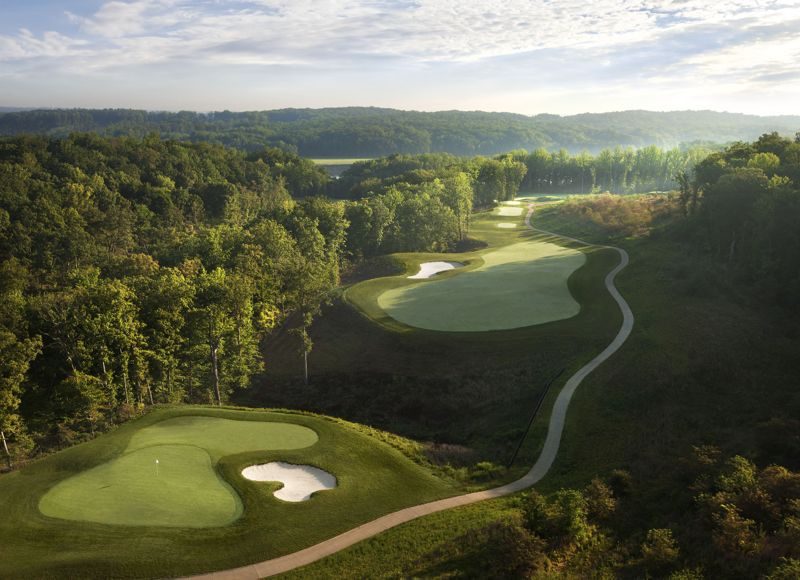
Virginia's mountaintop masterpiece. Donald Steel routed the Highland Course across a Blue Ridge plateau on Primland's 12,000-acre estate, and the views do half the talking: the Pinnacles of Dan stand behind the par-5 opener, ridgelines fall away on both sides, and on a clear day the horizon runs into North Carolina. Golfweek's panel puts it No. 1 among Virginia courses you can play, and GOLF Magazine counts it among America's Top 100 Courses You Can Play. At 7,053 yards of par 72 it plays every bit as serious as it looks - large undulating greens, precipitous drop-offs and a closing stretch that sweeps through the high country. No water, no housing, just mountain golf at its most theatrical, an hour and a half southwest of Roanoke. Read our course guide.
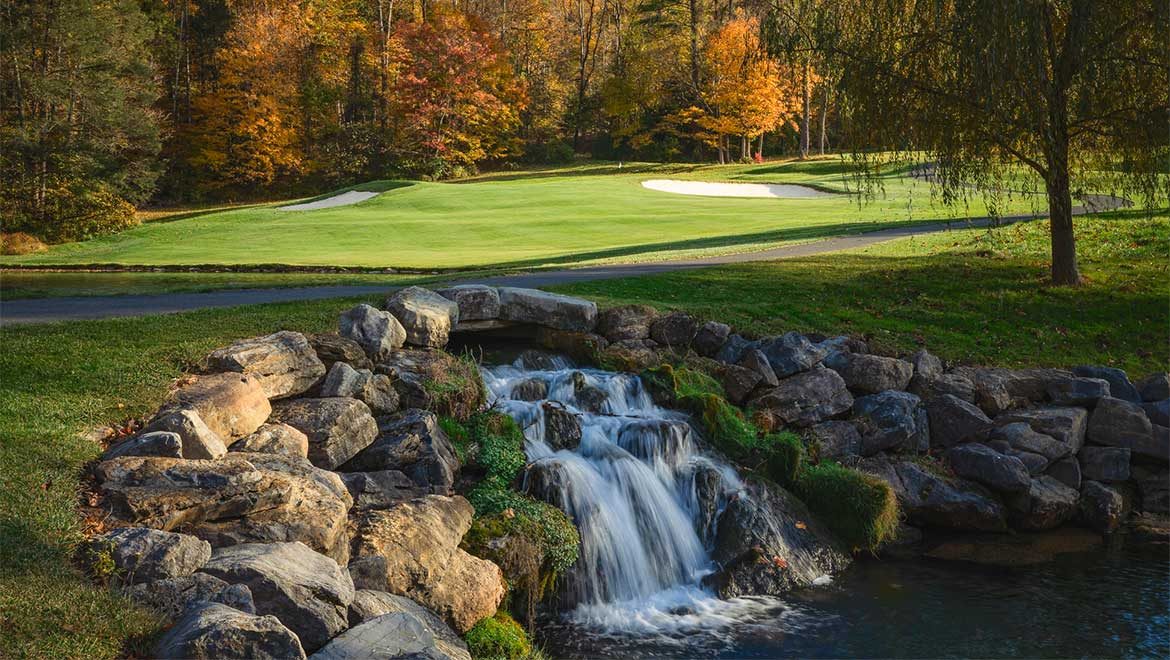
The golden-age giant of the Alleghenies, and Sam Snead's home turf. William Flynn opened the Cascades in 1923 on land other architects had passed on, dynamiting limestone to find fairways in a valley cradled by wooded ridges - and the USGA has been coming back ever since: the 1928 U.S. Women's Amateur, the 1966 Curtis Cup, the 1967 U.S. Women's Open, the 1988 U.S. Amateur and the 2000 U.S. Mid-Amateur all played here. At a par-70 6,679 yards it wins with angles rather than length: sloping fairways, a mountain stream threaded through the routing and a finish that runs 3-5-5-3. Snead, the first golf professional at the Cascades, shot 61 here and liked to say a round meant cleaning all 14 clubs. Golfweek ranks it No. 2 in the state; history ranks it first. Read our course guide.
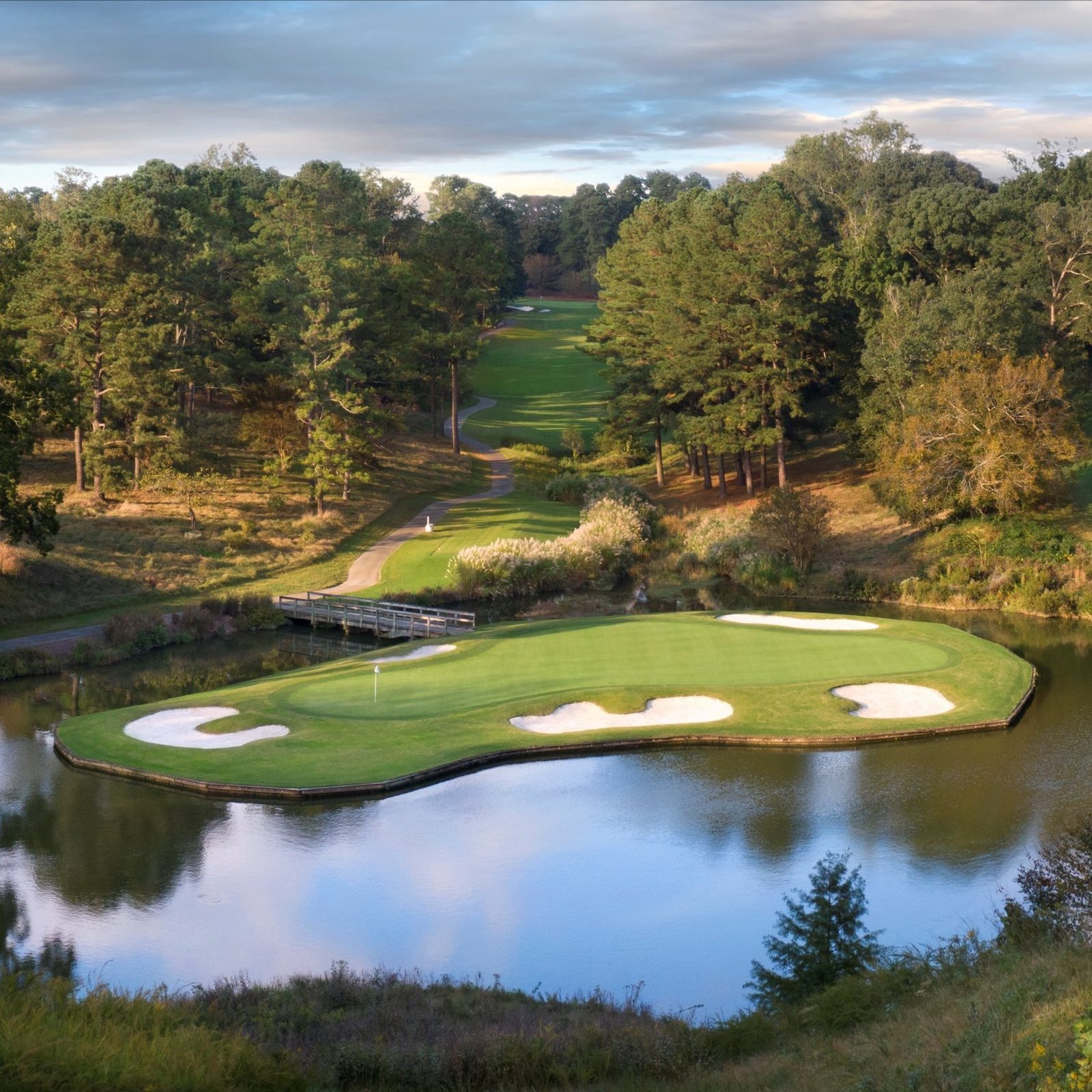
Robert Trent Jones Sr. called the Gold his finest design when it opened in 1963: a natural arboretum in the heart of Colonial Williamsburg, all hardwoods, ravines and ponds, with four par 3s golfers remember for years - the island-green 16th over the water is the postcard. His son Rees Jones directed a full renovation that reopened on July 1, 2017, rebuilding every green and bunker while keeping his father's routing intact, and the panels responded: Golf Digest has placed the Gold among America's 100 Greatest Public Courses and GOLF Magazine in its Top 100 Courses You Can Play. At 6,817 yards and par 71 it is pure parkland theater, a short stroll from Duke of Gloucester Street. Read our course guide.
Pete Dye's gentlest masterpiece, hiding in Virginia hunt country east of Charlottesville. Dye rebuilt Keswick Hall's course from the ground up and opened Full Cry in the fall of 2014, naming it for the cry of hounds in full pursuit - foxhounds are still raised on the property. The surprises are what is missing: generous fairways, open green fronts that invite the running shot, and small, cunning bunkers in place of Dye's usual spectacle. Golfweek puts it No. 4 in Virginia and GOLF Magazine includes it in the Top 100 Courses You Can Play, with the Blue Ridge foothills framing every hole. It is the rare Dye course that charms every handicap in the group. Read our course guide.
Virginia golf's home base, fifteen miles west of Richmond. Independence opened in 2001 as the home of the Virginia State Golf Association, with a Tom Fazio championship course across 260 acres of rolling Piedmont pines, creeks and wetlands, plus a nine-hole short course and one of the state's great practice grounds. Lester George's 2014 renovation removed more than 500 trees and nearly half the bunkers, opening up the views and the strategy, and Golfweek's current panel places it No. 5 in the state. Championship bones, a daily-fee welcome, and a mission to grow the game baked into the deed. Read our course guide.
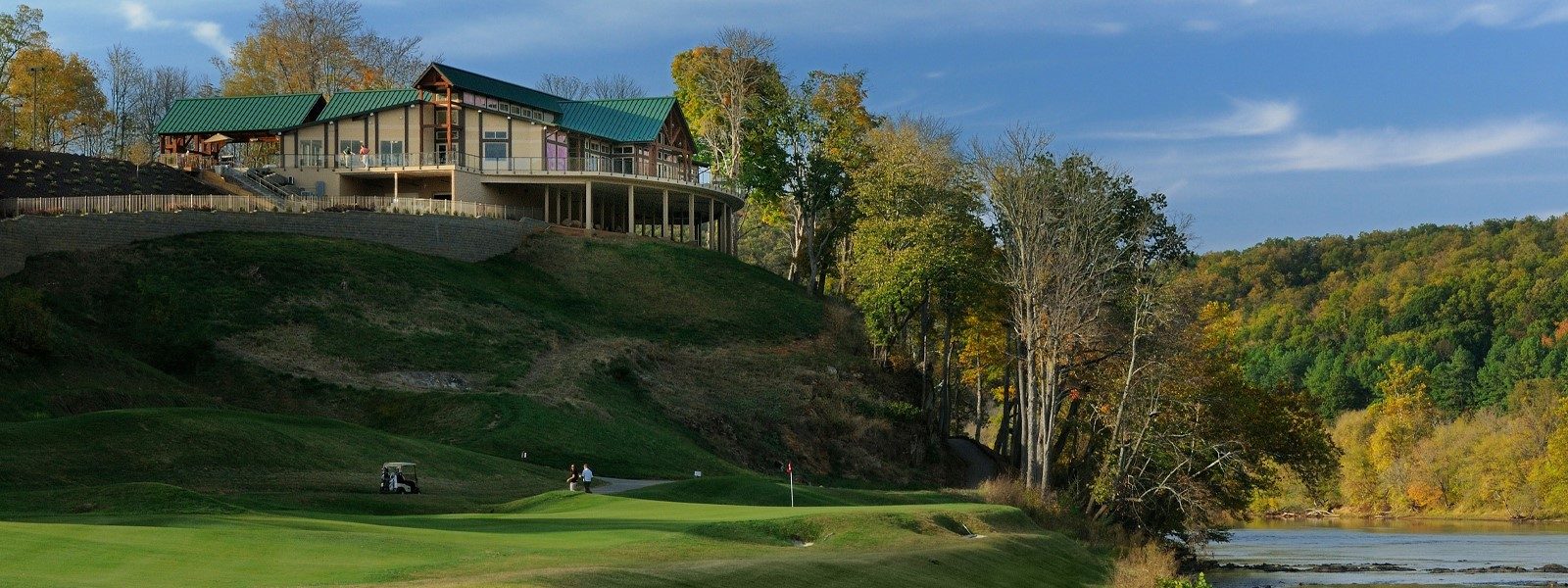
A Pete Dye thrill ride along the New River, and the home course of the Virginia Tech golf team. Opened in 2005, the River Course wraps its holes around the bluffs and bends of the river at Radford: railroad ties, bold bunkering and greens perched above the water, with the Blue Ridge rolling away in every direction. Dye cared so much about this build that he put his own design fee back into the course when construction ran over. Golfweek ranks it No. 6 in Virginia, and it may be the best-value Dye in America - a full championship examination on a public tee sheet, an hour west of Roanoke. Read our course guide.
Kingsmill Resort (River Course)
Resort
Williamsburg - Pete Dye (1975)
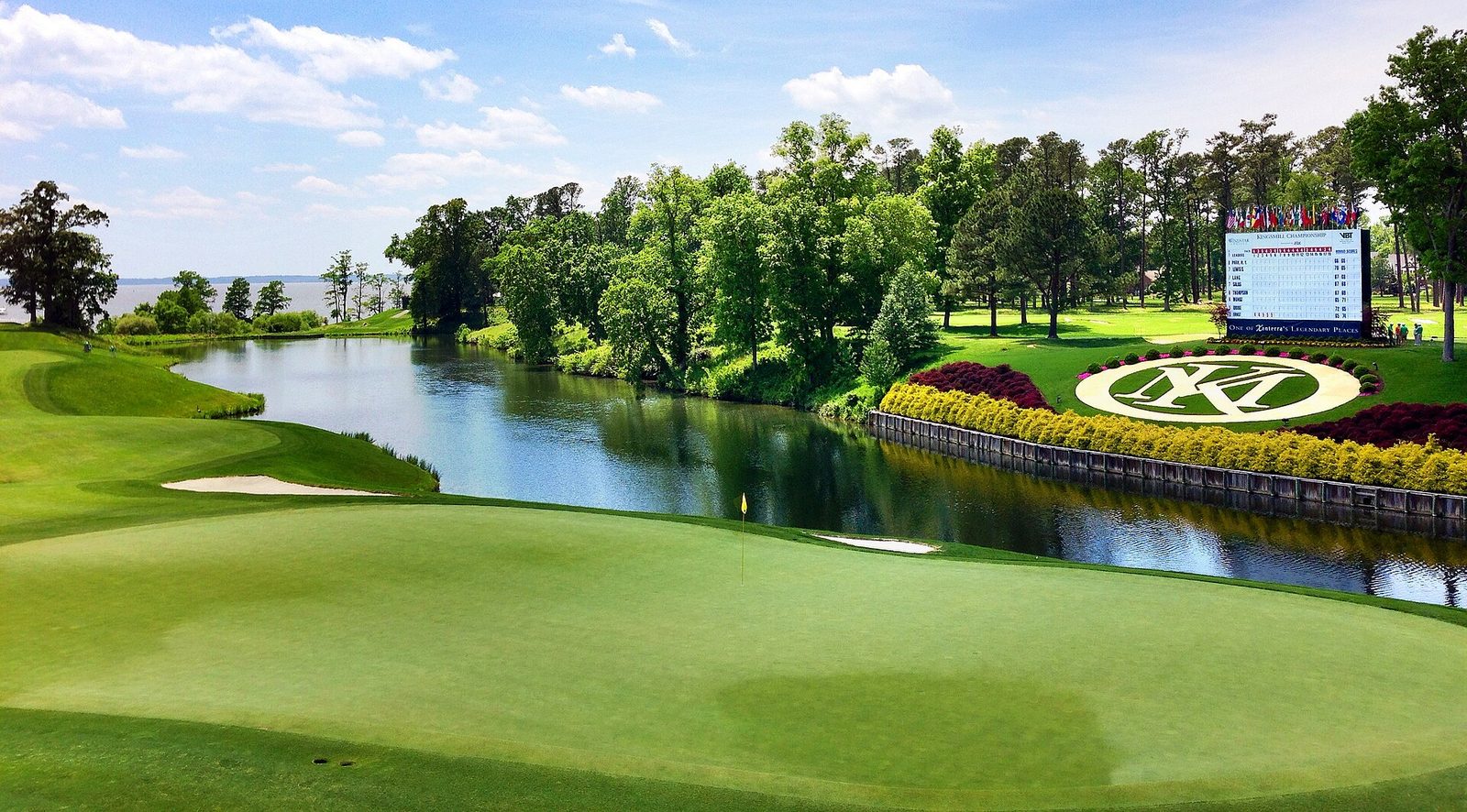
Tournament golf on the James River. Pete Dye built the River Course at Kingsmill in 1975, and the pros kept it famous: the PGA Tour's Michelob Championship called it home for two decades, and the LPGA's Kingsmill Championship followed. The closing stretch is the show - a par-3 17th over water and an 18th that runs along the river bluffs - but the whole routing has that early-Dye blend of beauty and menace through mature hardwoods above the James. It anchors the golf at one of Virginia's great resorts, ten minutes from Colonial Williamsburg. Golfweek ranks it No. 7 in the state. Read our course guide.
Sam Snead's farewell design. Late in his life the Slammer teamed with architect Ed Carton to lay out Poplar Grove in the foothills below the Blue Ridge near Amherst, and it opened in 2005 as the final course Snead helped create: big, rolling fairways, bold bunkering and mountain views that Snead, a native son of these hills, knew by heart. Golfweek's panel keeps it in the state's top ten, and the setting does the rest - a quiet, scenic round that doubles as a shrine to Virginia's greatest golfer, thirty minutes north of Lynchburg. Read our course guide.
The oldest first tee in America still taking golfers. Six holes opened at The Homestead in 1892, Donald Ross expanded the course to eighteen holes in 1913, and that first tee has been in continuous use ever since - the oldest in the nation. The Old Course is the friendly sibling at the resort: 6,227 yards of par 72 with dramatic elevation changes and slick greens tumbling through the Allegheny foothills, on ground where a young Sam Snead used to sneak on and play. Golfweek ranks it No. 9 among Virginia courses you can play, and no round in the state comes with a longer memory. Read our course guide.
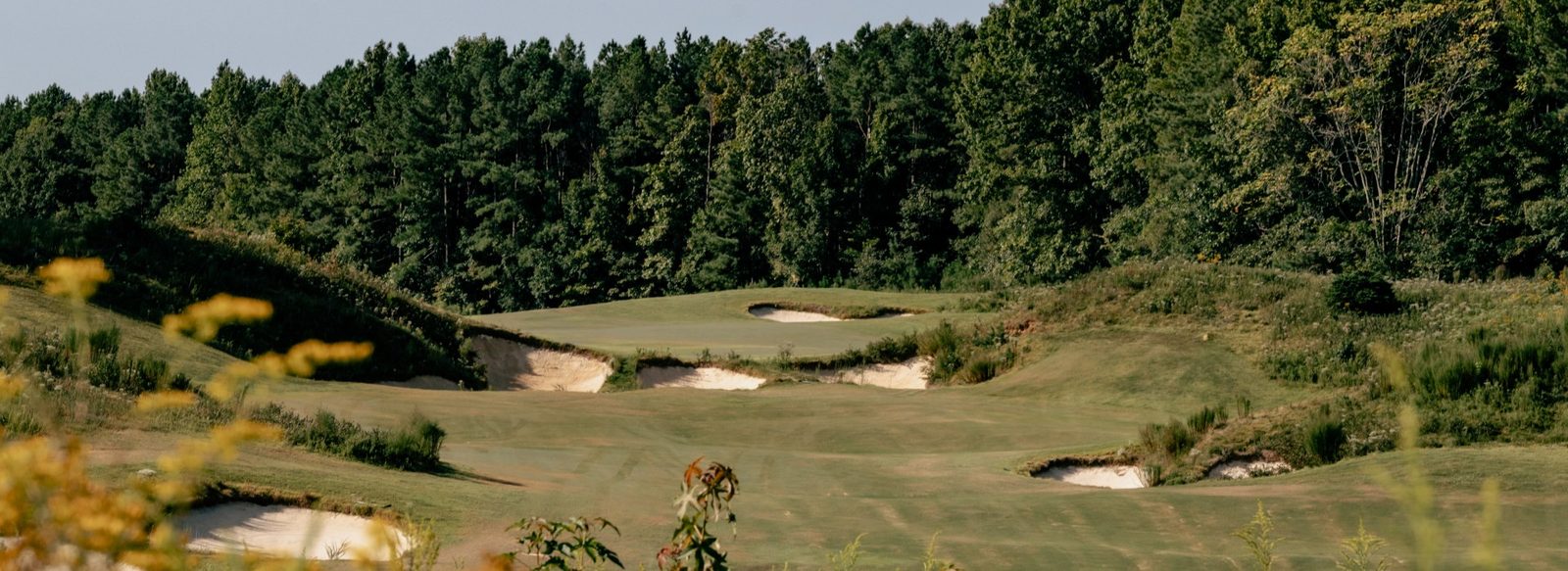
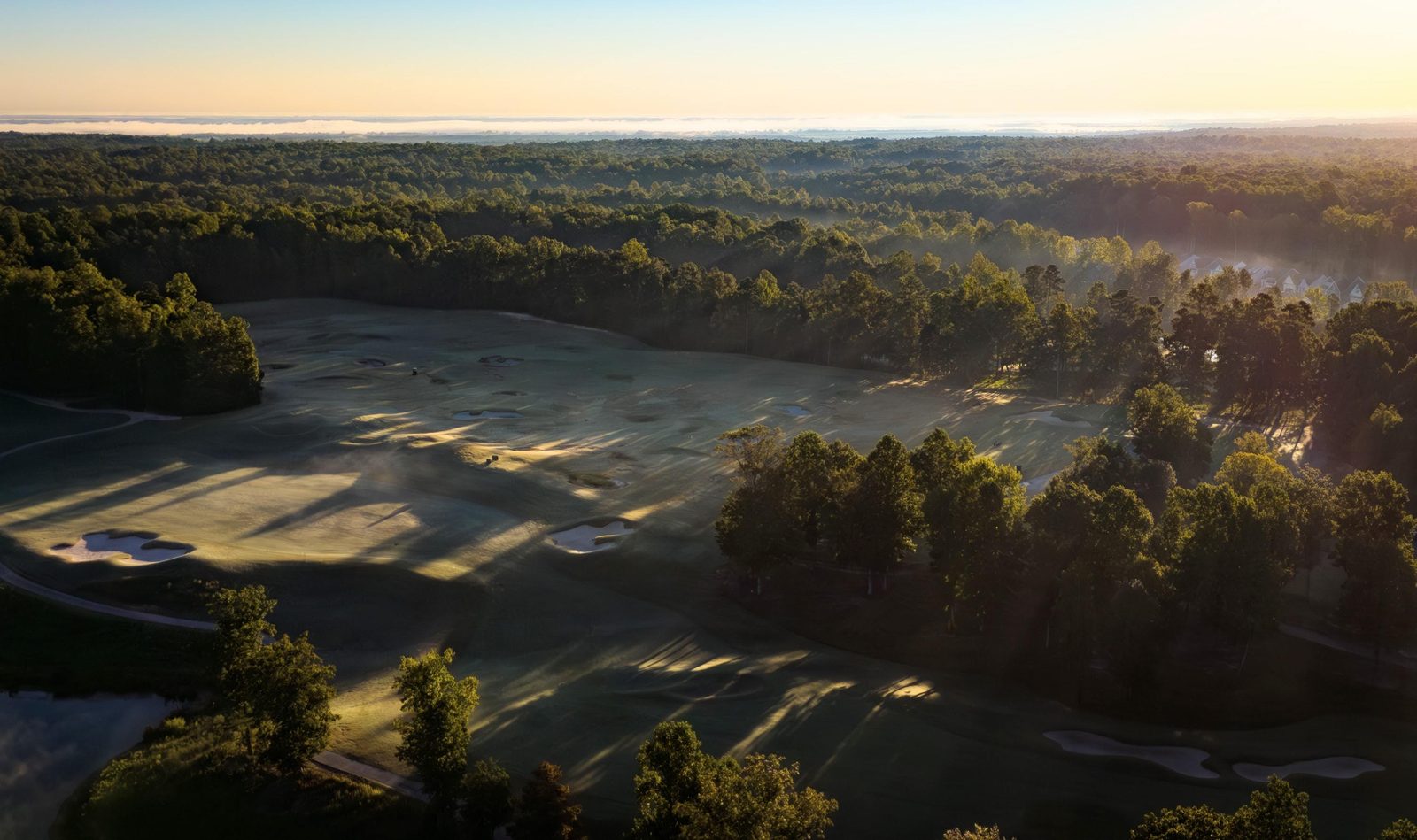
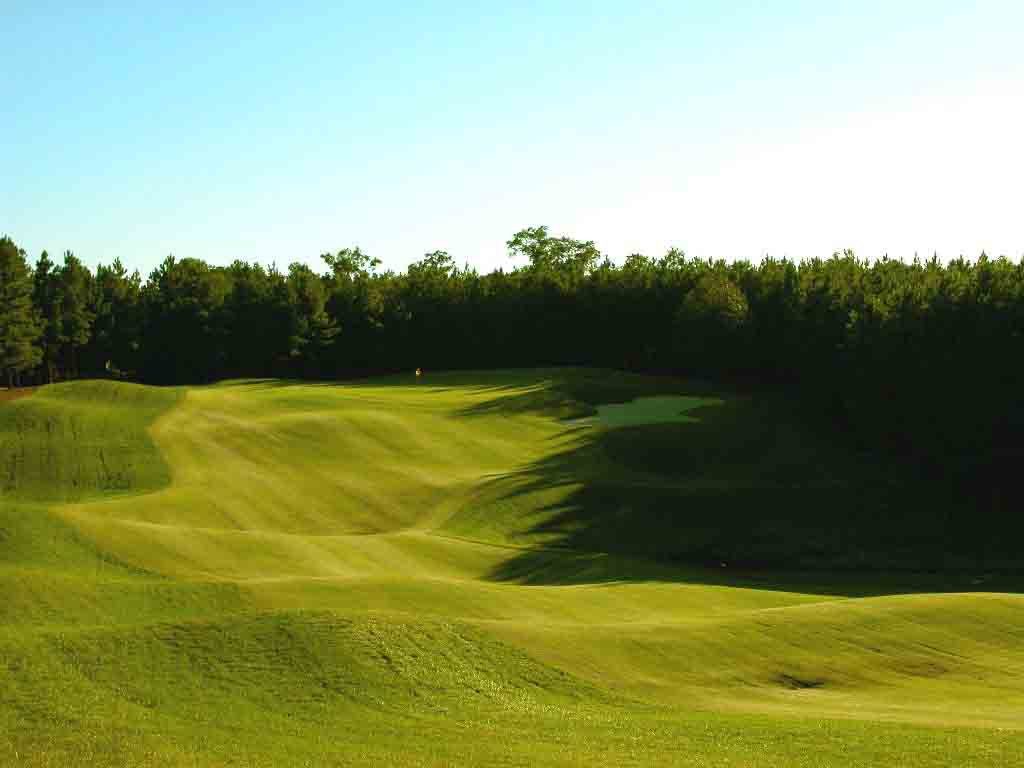
Ireland, transplanted to the Virginia Tidewater. Mike Strantz built Royal New Kent in 1997 as his love letter to the great Irish links, with towering dunes, vast bunkers, hidden greens and elevation changes nobody expects twenty minutes east of Richmond. It won Golf Digest's Best New Upscale Public Course honors for 1997 - a year after his Stonehouse, No. 15 on this list, won the same award - and it remains the wildest ride in Virginia golf: blind shots, heroic carries and a finishing stretch golfers describe in the car park for an hour afterward. Golfweek ranks it No. 10 in the state. Read our course guide.
The Next Five
Ranks 11-15 complete the picture: a Rees Jones brute beside a winery, a Lohmann sleeper in the Caroline County pines, the capital's public Nicklaus, a lakeside showpiece in Gainesville, and Strantz's resurrected original. On a long Virginia trip, this is the bench that fills the second half of the itinerary.
The Club at Viniterra
Semi-private
New Kent - Rees Jones (2009)
Rees Jones's Tidewater brute, opened in September 2009 amid the New Kent Vineyards: some 7,500 yards of par 72 with dramatic elevation changes, thirteen bridges and a set of par 5s stretching to 612 yards from the back tees. Built as a private amenity, it opened to public play as it matured and debuted in Golfweek's Virginia top ten. The New Kent Winery next door, built from century-old reclaimed timbers, makes it the state's most delicious 19th hole. Read our course guide.
Bob Lohmann's 2004 sleeper north of Richmond: 6,937 yards of par 72 across more than 330 acres of rolling oak, beech and pine forest at Ruther Glen, with streams, wetlands and a five-acre lake in play and elevation changes that feel borrowed from the foothills. Golf Digest named it one of America's Greatest Public Courses in 2009, and regulars still call it the best-kept secret in central Virginia golf. Read our course guide.
The Washington area's first publicly accessible Jack Nicklaus Signature design, opened in May 2014 after the recession gave it seven years of grow-in: 7,082 yards of par 72 through hardwood forest above Powells Creek and the Potomac River, about thirty miles south of the capital. Elevated tees, bold bunkering and mature trees make it play older than it is - Nicklaus called it a masterpiece at the opening. Read our course guide.
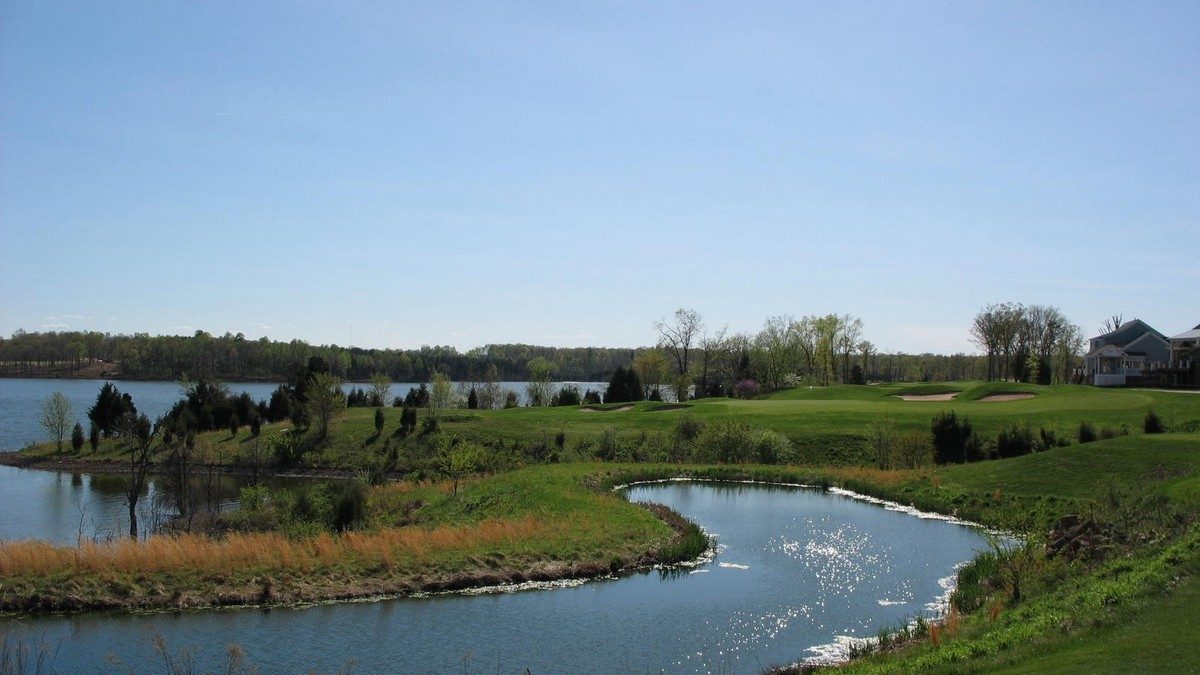
Northern Virginia's country club for a day, on the shore of Lake Manassas. Tom Jackson opened Stonewall in 2001: 7,002 yards of par 72 with the lake visible from fifteen holes, Bull Run Mountain views, bentgrass everywhere and hole names borrowed from the Civil War country it marches across. It lives like a private club, grand clubhouse and all, on a public tee sheet about thirty-six miles west of Washington. Read our course guide.
Mike Strantz's other Virginia fever dream, twenty minutes from Royal New Kent. Stonehouse opened in 1996 and immediately won Golf Digest's Best New Upscale Public Course award - bold contours, steep ravines and holes Strantz was proud to have built by barely moving dirt. It closed in 2017, new ownership revived it in 2019, and Golfweek's panel still ranks it in the state's top fifteen. Eccentricity this good does not stay buried. Read our course guide.
Birdwood at Boar's Head Resort in Charlottesville (Davis Love III's redesign, opened 2020) leads the next wave, alongside Laurel Hill in Lorton (Fairfax County's championship public course), the Golden Horseshoe Green Course in Williamsburg (Rees Jones, 1991), Devils Knob at Wintergreen (the highest course in Virginia) and the Robert Trent Jones Jr. course at Lansdowne Resort in Leesburg. Absent on purpose: Kinloch, The Olde Farm, Robert Trent Jones Golf Club, Ballyhack, The Foundry, Creighton Farms and Trump National Washington DC make Virginia a genuine private-golf power - and Spring Creek in Gordonsville, a public star for years and Golf Digest's Best New Affordable Public Course in America for 2007, joined them on May 1, 2024, when it went fully private - but none of them will sell you a tee time, and Mulliganist only ranks courses you can actually play.