Heron Point by Pete Dye
Pete Dye in a mischievous mood, an inland counterpoint to Harbour Town full of railroad ties, mounding and water, hidden in the Sea Pines forest.
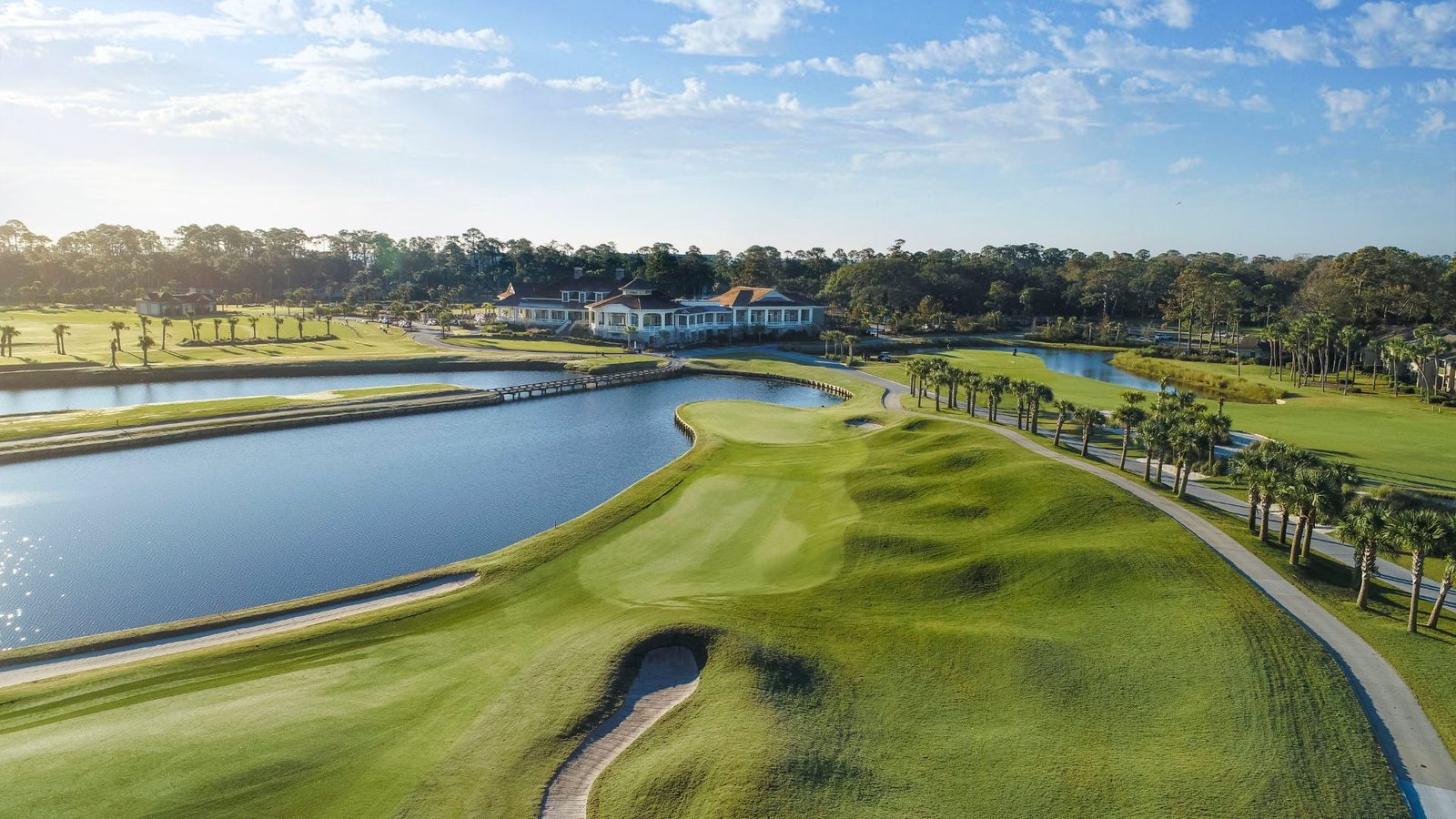
Fame lives down the road at Harbour Town, but the mischief lives here. Heron Point is the 2007 creation of Pete Dye, sitting inland in the forest of Sea Pines less than a mile from his Harbour Town masterpiece, and it plays like a walk through his sketchbook. Railroad ties shore up bunker faces, steep fall-offs gather around the greens, fairways bend toward hazards and away from them, and mounds and swales frame every target. It rewards the golfer who thinks in angles.
Harbour Town is a precision instrument, and Heron Point is a puzzle box. The fairways run through tight, tree-lined corridors, water waits on hole after hole, and the greens are defended less by length than by contour and consequence. Golfers who love the work of Dye will find every trademark present and accounted for, and golfers meeting him for the first time get the full introduction in a single round.
The Scorecard
The card here follows the Blue row from the printed scorecard of The Sea Pines Resort. It goes out in 3,242 and home in 3,281, for 6,523 yards at par 72, and every figure agrees with the printed subtotals. The rating of 72.3 and slope of 132 come from the ratings table on that same card, where the Blue set carries exactly that pair, and a published tee table for the course agrees. From the back Dye tees, the examination stretches to 7,035 yards.
By the Numbers
From the scorecard below: Blue.
From the Blue it plays to a slope of 132, rating 72.3, steeper than about 15% of the 182 courses in our database with a published slope.
| Front nine | Par | Yards |
|---|---|---|
| Hole 1 | 4 | 376 |
| Hole 2 | 4 | 286 |
| Hole 3 | 4 | 363 |
| Hole 4 | 3 | 208 |
| Hole 5 | 4 | 380 |
| Hole 6 | 5 | 539 |
| Hole 7 | 3 | 164 |
| Hole 8 | 4 | 412 |
| Hole 9 | 5 | 514 |
| Total | 36 | 3,242 |
| Back nine | Par | Yards |
|---|---|---|
| Hole 10 | 4 | 348 |
| Hole 11 | 5 | 550 |
| Hole 12 | 4 | 403 |
| Hole 13 | 3 | 141 |
| Hole 14 | 4 | 350 |
| Hole 15 | 4 | 440 |
| Hole 16 | 3 | 196 |
| Hole 17 | 5 | 476 |
| Hole 18 | 4 | 377 |
| Total | 36 | 3,281 |
Coming home carries 39 more yards than going out, and the architecture alternates demand and daring along the way. The 550-yard 11th is the longest hole on the card, the 141-yard 13th is the shortest, and the 440-yard 15th is the longest par 4 anywhere on the course. The outward nine keeps extremes of its own in reserve, with the gentle 286-yard 2nd as the shortest par 4 on the card set against the 539-yard 6th and the 412-yard 8th, which the handicap row on the scorecard marks as the hardest hole at Heron Point.
Green Fees
- LocationHilton Head Island, South Carolina
- Par / Yardage72 / 6,523 yards (Blue)
Heron Point is priced the same way as its Sea Pines sisters, dynamically through the booking engine of the resort, by season and by resort-guest status, with no static rate card published. The resort periodically offers seasonal afternoon specials for the course, and resort guests receive preferred rates and booking privileges. The tee sheet from the resort carries the live number for any given date.
The Story
The ground was the second course at Sea Pines, the Sea Marsh layout by George Cobb, which opened in 1961 when the resort was young. That layout served for more than four decades before the resort commissioned Dye, whose Harbour Town had made the island famous, to reimagine it completely. The multimillion-dollar redesign kept the name of its herons and its place in the forest and changed essentially everything else, and the course reopened in 2007 as Heron Point by Pete Dye.
The rebuilt course shares the 23,000-square-foot Plantation Golf Club clubhouse with Atlantic Dunes, so the inland and seaside contrasts of the resort sit only a few steps apart. The printed scorecard notes Heron Point's designation as an Audubon Cooperative Sanctuary, and the herons, egrets and alligators of the lagoons remain very much part of the round, just as they were in the Sea Marsh days.
Signature Holes
Hole 7 - Par 3, 164 yards
Call this one the railroad tie hole. The beloved railway sleepers of Dye shore the face of the vast bunker that guards this 164-yard par 3, in the same construction language he used at Harbour Town down the road, and the sand stretches wide enough to swallow a pushed shot from any part of the tee. It is the most photographed moment on the front nine and the clearest statement that this is a Dye course through and through.
Hole 13 - Par 3, 141 yards
The shortest hole on the card is a pure water par 3 in the Dye tradition at 141 yards, with water waiting for anything missed left and a bailout area to the right that leaves an awkward recovery of its own. Coming where it does, in the middle of the tightest stretch on the back nine, it asks the simplest question on the course and accepts no hedging in the answer.
Hole 18 - Par 4, 377 yards
The finisher has been called a kinder and gentler echo of the famous 18th by Dye at TPC Sawgrass, and the family resemblance is real. Water runs down the entire left side of this 377-yard par 4 from tee to green, while the right side offers room at the price of a harder angle home. It closes the round with one last decision, which is exactly how Dye liked to end a day.
Practical Info
Heron Point shares the Plantation Golf Club clubhouse at 100 North Sea Pines Drive with Atlantic Dunes, and pairing the two in one day is the standard inland-and-ocean double at Sea Pines. Golf at the resort is open to resort guests and, within the booking window, to visiting golfers, and the site of the resort itself carries the tee sheet and the current seasonal specials.
Leave the alligators in the lagoons alone and do not feed or disturb them, as the card from the course itself asks. The club also provides junior tees on every hole, which makes Heron Point a friendlier family round than its Dye reputation might suggest. The corridors are tight, so the premium all day sits on the tee shot that finds the correct side of the fairway.
Questions, Answered
What was Heron Point before Pete Dye rebuilt it?
It was Sea Marsh, a design by George Cobb that opened in 1961 as the second course at Sea Pines. Pete Dye redesigned it completely in a multimillion-dollar project, and the reborn course reopened in 2007 as Heron Point by Pete Dye, with new greens, reshaped fairways and his signature mounding, ties and water features throughout.
How does Heron Point compare with Harbour Town?
Harbour Town, less than a mile away, is the famous PGA Tour venue, narrow and precise and finished along Calibogue Sound. Heron Point shows Dye in a wilder mood, set inland in the forest with wider playing corridors in places but sharper angles, more mounding and water in play on most holes. Many golfers at Sea Pines quietly prefer it.
How difficult is Heron Point?
From the Blue tees on the card here it plays 6,523 yards at a rating of 72.3 and a slope of 132, and the back Dye tees reach 7,035 yards at 74.8 and 140. The difficulty comes from Dye rather than brute length, with tight corridors, angled greens and water that must be carried or skirted all day.
Keep Exploring South Carolina
Read our South Carolina Golf Guide for more top courses, green fees, and trip planning across the state.
Heron Point by Pete Dye features in our ranking of the 20 Best Golf Courses in South Carolina.
More South Carolina course guides: Caledonia Golf & Fish Club, The Dunes Golf & Beach Club, True Blue Golf Club, Atlantic Dunes by Davis Love III, Osprey Point Golf Course, TPC Myrtle Beach, Tidewater Golf Club, Grande Dunes Resort Club, Legends Resort - Moorland Course, Cougar Point Golf Course, Barefoot Resort - Dye Course, Prestwick Country Club, Legends Resort - Heathland Course, Turtle Point Golf Course, Palmetto Dunes - Robert Trent Jones Course, King's North at Myrtle Beach National, Kiawah Island - Ocean Course and Harbour Town Golf Links.