Bulle Rock Golf Course
Pete Dye on the old Blenheim Farm thoroughbred ground above the Susquehanna, Maryland's No. 1 public course and a former LPGA major venue.
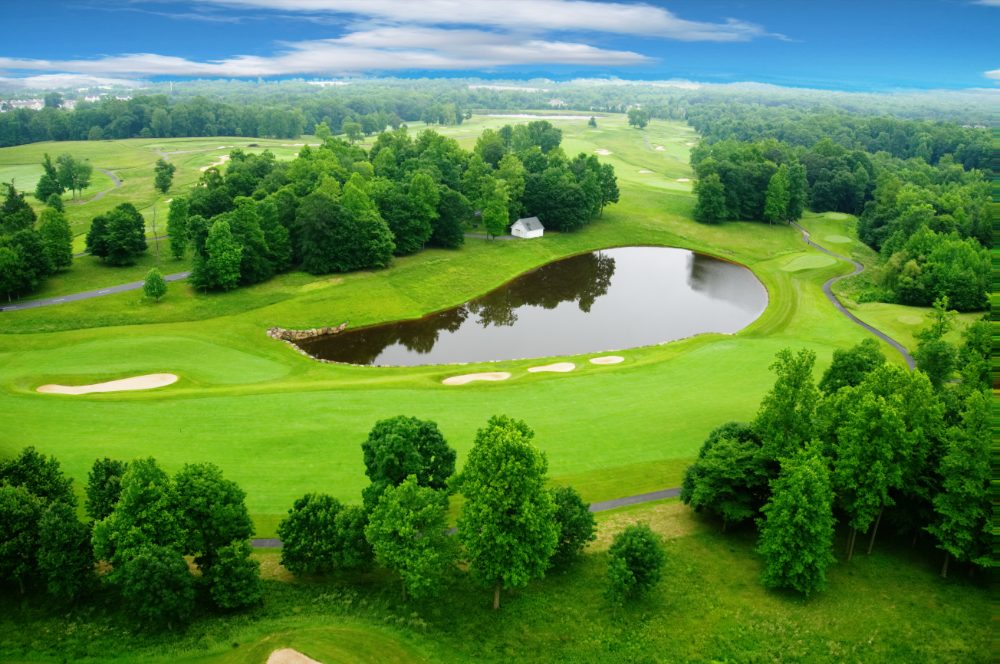
Pete Dye built this one on sacred horse ground. Bulle Rock spreads across the old Blenheim Farm above the Susquehanna River in Havre de Grace, thoroughbred country where the course takes its name from Bulle Rock, remembered as the first thoroughbred racehorse brought to America. The golf matches the pedigree. At 7,375 yards of par 72 from the Black tees, rated 75.6 with a slope of 146, it is a full Dye examination, and it held a major championship for five years, the McDonald's LPGA Championship from 2005 to 2009. We rank it first among Maryland courses you can play.
Dye's hand is everywhere, in the angles, the visuals and the green complexes that ask to be approached from one side only. The club describes its product as 18 signature holes, which is marketing, but the underlying truth is that there is no breather nine here. The card builds steadily to the 665-yard 11th, the longest hole on the course, and the finish keeps the pressure on with the 529-yard 15th and a 485-yard closer. It is daily-fee golf at championship standard, open to the public every day, priced like a premium municipal rather than a resort trophy.
The value is the quiet headline. A former major venue by a Hall of Fame architect, an hour from Baltimore and ninety minutes from Philadelphia, at a peak weekend fee of $124 including cart and range balls. In the modern market that is close to an anomaly, and it explains why Bulle Rock draws traveling golfers the way it draws rankings, first in Maryland on our list and a fixture on national best-value conversations.
The Scorecard
The card below shows the Black tees, taken from the club's own published scorecard. It plays 7,375 yards at par 72, rated 75.6 with a slope of 146, and it foots exactly, 3,646 yards out and 3,729 back. One sourcing note, because it matters. Cite the club at bullerockgc.com only. A similarly named site, bullerockgolf.com, is an unrelated blog and has nothing to do with the course.
By the Numbers
From the scorecard below: Black tees.
From the Black tees it plays to a slope of 146, rating 75.6, steeper than about 83% of the 182 courses in our database with a published slope.
| Front nine | Par | Yards |
|---|---|---|
| Hole 1 | 4 | 358 |
| Hole 2 | 5 | 572 |
| Hole 3 | 3 | 177 |
| Hole 4 | 4 | 417 |
| Hole 5 | 4 | 483 |
| Hole 6 | 4 | 413 |
| Hole 7 | 3 | 202 |
| Hole 8 | 5 | 546 |
| Hole 9 | 4 | 478 |
| Total | 36 | 3,646 |
| Back nine | Par | Yards |
|---|---|---|
| Hole 10 | 4 | 393 |
| Hole 11 | 5 | 665 |
| Hole 12 | 3 | 190 |
| Hole 13 | 4 | 476 |
| Hole 14 | 4 | 372 |
| Hole 15 | 5 | 529 |
| Hole 16 | 4 | 425 |
| Hole 17 | 3 | 194 |
| Hole 18 | 4 | 485 |
| Total | 36 | 3,729 |
The card's architecture is a steady tightening. The front nine offers its chances early, a 358-yard opener and par 5s at the 2nd and 8th, then the back nine takes them away, 665 at the 11th, 529 at the 15th and the longest par 4 of the day, 485 yards, saved for the 18th. The par 3s are the card's only short work, none past 202 yards, and the slope of 146 does not come from length alone. It comes from Dye's angles, which the yardage table can only hint at.
Green Fees
- Peak season weekday, Monday to Thursday$99
- Peak season weekend, Friday to Sunday$124
- Low season, daily$75 to $85
- LocationHavre de Grace, Maryland
- Par / Yardage72 / 7,375 yards (Black tees)
The club publishes a proper seasonal schedule, a rarity worth celebrating. Its 2026 schedule puts the daily fee at $99 on weekdays and $124 on weekends through the main season, April 3 to November 15, stepping down to $85 in the shoulder windows and $75 in deep winter. Every rate includes greens fee, cart and practice balls before the round, and a 5 percent City of Havre de Grace admission and amusement tax is added on top. Booking channels discount below the rack in the shoulder season, as they do everywhere, but the published card is the honest baseline, and resident and associate-member columns run below it.
The Story
The course opened in 1998, Pete Dye's design on the Blenheim Farm land above the river, and the club has billed itself as Maryland's top daily-fee course from the beginning. The championship chapter arrived in 2005, when the McDonald's LPGA Championship moved to Bulle Rock and stayed five years. Annika Sorenstam won the first edition here, and the event's run through 2009 put the course on the major-championship map before the tournament moved on. The club's own rate documents still print the line with pride, host of the LPGA Championship 2005 to 2009.
The competitive story did not end there. Bulle Rock hosted the NCAA Women's Big Ten Championships in 2024 and 2025, a sign of how the course's standing has matured, from major venue to a championship test the college game trusts. Through it all the model has stayed the same, daily-fee public golf with membership packages layered on top for regulars, associate members earning a 30-day booking preference while the public books the same course on the same day. One magazine piece dates the opening to 1999, but the club's own materials and the reference record support 1998, the year on our ranking.
Signature Holes
Hole 11 - Par 5 - 665 yards
The longest hole on the course and the hinge of the back nine. At 665 yards the 11th is a three-shot hole for every golfer who will ever play here, and Dye uses the length the way he always does, to make the second shot's position matter more than its distance. It begins the inward half's long examination, and by the time you reach its green the round has fully changed character from the gentler opening stretch.
Hole 9 - Par 4 - 478 yards
The closer of the front nine, singled out for praise in GolfPass's course coverage for its scenery, and a brute in its own right at 478 yards. The 9th brings the outward half home at full championship length, the third consecutive demanding hole in a closing stretch of the front nine that goes 546 and then 478 into the turn. Score well here and the round has a foundation. Leak oil and the 11th is waiting.
Hole 18 - Par 4 - 485 yards
A finisher built to major-championship scale, which is appropriate, because this green received the final putts of five LPGA majors. At 485 yards it is the longest par 4 on the card, played back toward the clubhouse ground above the river, and it closes a back nine that asks for 3,729 yards of your best golf. Dye never believed in a soft landing, and Bulle Rock's last word is entirely in character.
No Breather, By Design
A gentle opener can fool people at Bulle Rock, briefly. The 358-yard first hole and early par 5s at the 2nd and the 8th offer chances, and then the card tightens with the patience of a trap. From the Black tees the full test measures 7,375 yards at par 72, rated 75.6 with a slope of 146, and the back nine at 3,729 yards plays longer and harder than the front at 3,646. Even the par 3s offer only short relief on paper, none of them stretching past 202 yards, because Pete Dye difficulty rarely comes from a yardage figure alone.
Angles do the real defending. Green complexes that ask to be approached from one side only punish the wrong half of a fairway far more than a slightly short drive, and the visuals keep suggesting lines that the hole then declines to reward. The 478-yard 9th closes the front nine at full championship length and sets the tone, bringing the outward half home with no soft landing. Score well there and the round has a foundation. Leak anything and the examination has barely started.
The inward half then raises the stakes in plain numbers. The 665-yard 11th, the longest hole on the course, plays as a genuine three-shot hole for every golfer who will ever stand on that tee, and Dye uses the length to make the position of the second shot matter more than its distance. The 529-yard 15th keeps the pressure on before the 485-yard 18th, the longest par 4 on the card, closes the round on a green that received the final putts of five LPGA majors between 2005 and 2009. Disciplined golfers who accept playing to the correct side, even at the cost of a longer approach, survive Bulle Rock. Aggression aimed at the wrong side of a green complex gets taxed on nearly every hole, politely and then all at once.
Practical Info
Bulle Rock is at 320 Blenheim Lane in Havre de Grace, just off Interstate 95 between Baltimore and Philadelphia, which makes it one of the easiest championship day trips in the Mid-Atlantic. It is public daily-fee golf, open every day, with tee times through the club and the usual booking channels. Rates include cart and practice balls, the 5 percent city tax is added at the register, and the main-season weekend peak of $124 is the number to budget. Twilight in the main season has historically started mid afternoon at a discount worth asking about.
Pair it regionally. Havre de Grace itself is a handsome river town worth an hour, and the Maryland ranking's Eastern Shore courses, including Dye's family's farewell at Perry Cabin, sit across the Bay Bridge for a longer trip. Bulle Rock is also the natural anchor of an I-95 golf run, ninety minutes from Philadelphia's western suburbs and an hour from downtown Baltimore. Book the morning on a spring or fall weekday and you will have a major venue nearly to yourself at the $99 weekday rate.
Questions, Answered
How much does it cost to play Bulle Rock?
The club's published 2026 daily-fee schedule charges $99 on weekdays and $124 on weekends in the main season, April 3 to November 15, with shoulder rates of $85 and winter rates of $75. Every rate includes greens fee, cart and practice balls, and a 5 percent City of Havre de Grace tax is added. Booking channels sometimes discount shoulder-season times below the published card.
What major championship did Bulle Rock host?
The McDonald's LPGA Championship, from 2005 to 2009, five editions of the LPGA's major, beginning with Annika Sorenstam's win in 2005. The club's own documents print the hosting line to this day. More recently the course hosted the NCAA Women's Big Ten Championships in 2024 and 2025.
Who designed Bulle Rock and when did it open?
Pete Dye designed it, opening in 1998 on the old Blenheim Farm thoroughbred ground above the Susquehanna River in Havre de Grace. The course is named for Bulle Rock, remembered as the first thoroughbred racehorse brought to America, who stood at stud in the region. One magazine piece gives 1999, but the club's materials and the reference record support 1998.
How hard is Bulle Rock?
Properly hard. From the Black tees it measures 7,375 yards at par 72, rated 75.6 with a slope of 146 on the club's own card. The difficulty is Dye's, angles and green complexes that defend one side fiercely, plus genuine length in the back nine, where the par 5s run 665 and 529 yards. Forward tees scale it down, and at the published prices it is one of the best-value hard courses in the East.
Keep Exploring Maryland
Read our Maryland Golf Guide for more top courses, green fees, and trip planning across the state.
Bulle Rock Golf Course features in our ranking of the 15 Best Golf Courses in Maryland.
More course guides: Pebble Beach Golf Links, Pinehurst No. 2 and Bandon Dunes.