Bedford Springs Old Course
America's layered masterpiece in the Pennsylvania mountains, Oldham, Tillinghast and Ross on one course, crowned by the Volcano and Tiny Tim.
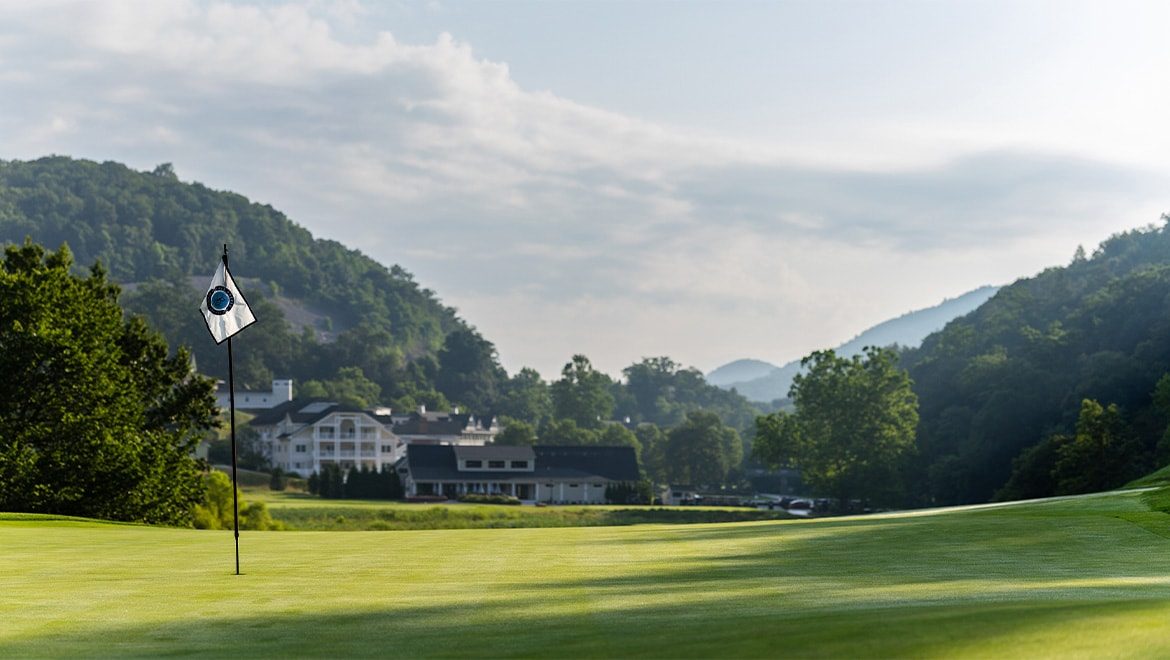
No course in America carries its history in layers like this one. The Old Course at Bedford Springs began in 1895 with Spencer Oldham's original holes along Shober's Run, making it among the oldest courses in the country, was reshaped by A.W. Tillinghast in 1912, then substantially rebuilt by Donald Ross in 1923, and was restored to that layered glory by Ron Forse in 2007. Three golden ages of American architecture survive on one mountainside in Bedford, Pennsylvania, and we rank it first among Pennsylvania courses you can play, a placement Golfweek's state list shares.
The famous holes carry names the way British courses do. The Volcano, the par-3 4th, plays to a two-tier green perched some 30 feet above the fairway on Ross's 1923 work, the course's No. 1 handicap hole, where a miss tumbles twenty feet and more into the bunkers. Tiny Tim, Tillinghast's par-3 14th, floats its kidney green over a lagoon, ringed by the conical Alps mounds he built with his own theatrical flair. Gene Sarazen said a par on the Volcano was like a birdie on a short par 4. Walter Hagen called it one of the best holes in America. They were not exaggerating for the brochure. The brochure did not exist yet.
The setting completes the argument. The Omni Bedford Springs Resort has welcomed guests to its mineral springs since 1806, one of the grand old resorts of the East, and the golf course wraps around the hotel in a valley of trout water and mountain ridges. GolfPass's Golfers' Choice rankings for 2025 placed this course No. 2 among all public courses in the United States and No. 1 for layout, conditions, pace and staff friendliness. At 6,785 yards of par 72 the Old Course is not long. It is something better. It is irreplaceable.
The Scorecard
The card below shows the Medal tees, the back set, from the club's published scorecard. It plays 6,785 yards at par 72, rated 73.7 with a slope of 140, and it foots exactly, 3,551 yards out and 3,234 home. The split par deserves its sentence. The front nine plays to 37 and the back to 35, an asymmetry modern architects smooth away and old courses carry proudly, and it is correct on the club's card, not an error.
By the Numbers
From the scorecard below: Medal tees.
From the Medal tees it plays to a slope of 140, rating 73.7, steeper than about 55% of the 182 courses in our database with a published slope.
| Front nine | Par | Yards |
|---|---|---|
| Hole 1 | 4 | 310 |
| Hole 2 | 3 | 192 |
| Hole 3 | 5 | 589 |
| Hole 4 | 3 | 223 |
| Hole 5 | 5 | 611 |
| Hole 6 | 4 | 358 |
| Hole 7 | 4 | 387 |
| Hole 8 | 4 | 356 |
| Hole 9 | 5 | 525 |
| Total | 37 | 3,551 |
| Back nine | Par | Yards |
|---|---|---|
| Hole 10 | 3 | 124 |
| Hole 11 | 4 | 467 |
| Hole 12 | 4 | 410 |
| Hole 13 | 5 | 615 |
| Hole 14 | 3 | 136 |
| Hole 15 | 4 | 359 |
| Hole 16 | 5 | 593 |
| Hole 17 | 3 | 174 |
| Hole 18 | 4 | 356 |
| Total | 35 | 3,234 |
This card is a museum that plays. Five par 3s and five par 5s is a Golden Age distribution no modern architect would dare, and Bedford wears it beautifully. The par 3s run from the 124-yard 10th to the Volcano's 223 at the 4th, with Tiny Tim the 136-yard jewel at the 14th, and the par 5s run 525 to 615 yards, the 611-yard 5th and the 593-yard 16th flanking the marathon 13th. The closing holes shrink in length and grow in precision, the 174-yard 17th and the 356-yard 18th a position player's finish beneath the old hotel. Nothing on this card is wasted, which after 130 years of edits by masters is exactly what you would hope to find.
Green Fees
- Non-resort guest, Friday-Sunday (in season)$289
- Non-resort guest, Monday-Thursday (in season)$239
- Resort guest, Friday-Sunday (in season)$259
- Daily rate, off-season$99
- LocationBedford, Pennsylvania
- Par / Yardage72 / 6,785 yards (Medal tees)
The operator publishes a full fee table, rare and welcome, and the figures here were re-verified against the resort's own 2026 Old Course Fees page at build. In season, May 1 to October 18, a non-resort guest pays $239 Monday to Thursday and $289 Friday to Sunday, and a resort guest pays $30 less across the board, $209 and $259. Off-season, the daily rate is $99 for everyone, twilight in season starts at 2 pm at $129 for guests and $99 for resort guests, and rentals run $65. One caution for the directory browsers. The older $179 figure floating around the aggregators matches nothing on the operator's current table and should be ignored.
The Story
The springs came first, a resort founded in 1806 on mineral waters that drew presidents and society to the Allegheny foothills. Golf arrived in 1895, when Spencer Oldham laid out one of the first courses in America along Shober's Run, and the resort's golfing identity begins there, the par-3 second still carries his name, the Spencer Oldham, in play since that first season. A.W. Tillinghast arrived in 1912 and left his Alps mounds and the Tiny Tim hole, and Donald Ross followed in 1923 with a substantial rebuild that added the Volcano and much of the course's championship character. Few properties anywhere can show three architects of that rank in succession on the same ground.
The twentieth century was unkind, as it was to most grand resorts, and the revival, when it came, was serious. The Omni restoration of the hotel was matched on the golf side by Ron Forse's 2007 restoration of the Old Course, research-driven work that returned the Ross and Tillinghast features to their documented forms. The modern verdicts have been emphatic. Golfweek ranks it the top course you can play in Pennsylvania, and GolfPass's golfer-voted rankings for 2025 put it No. 2 among public courses in the entire country, No. 1 in the layout, conditions, pace and staff categories. The layered masterpiece is having its best century since the first one.
Signature Holes
Hole 4 - Par 3 - 223 yards
The Volcano, and one of the great par 3s in American golf. Ross built this green in 1923 on a knob some 30 feet above the fairway, a two-tier target where the tee shot must carry the slope and stop, because anything short or sideways tumbles twenty feet and more down into the bunkers ringing the hill. It is the course's No. 1 handicap hole at only 223 yards, a ranking that tells you everything. The endorsements are a century old and unimprovable. Sarazen likened a par here to a birdie on a short par 4, and Hagen placed it among the finest holes in America. Play it and you will spend the rest of the round describing it.
Hole 14 - Par 3 - 136 yards
Tiny Tim, Tillinghast's showpiece from 1912. The green is a kidney shape set into a lagoon, ringed by the conical grass mounds Tillinghast called his Alps, a hole that looks like a stage set and plays like an examination. The name has wandered in a few retellings, occasionally attached to the wrong hole, but the record from the course's historians is clear, Tiny Tim is the 14th, the lagoon hole, and it is the Tillinghast signature in its purest surviving form. One caution against the water, one gorgeous photograph, one very nervous short iron.
Hole 13 - Par 5 - 615 yards
The course's longest hole goes by the plainest name in golf, Long, and it earns it at 615 yards along the valley. The 13th is the back nine's marathon between its two famous one-shotters, and it shows the Ross side of the property's character, a full-blooded three-shotter routed along Shober's Run country where the mountain air and the climbing ground add their quiet yardage. On a course celebrated for its par 3s, Long is the reminder that Bedford's examination has a heavyweight division too.
Three Architects, One Argument
Count the par 3s and par 5s first, because no modern architect would dare this distribution. Bedford Springs plays five of each alongside just eight par 4s, across 6,785 yards of par 72 from the Medal tees, rated 73.7 with a slope of 140. The front nine runs to par 37 and the back nine to par 35, an asymmetry the old courses carry proudly, and the yardage swings wildly inside that frame. Par 3s run from the 124-yard 10th to the 223-yard 4th, while par 5s stretch from 525 yards all the way to 615. A round here keeps changing its question before any rhythm can settle.
The two famous one-shotters explain how three architects can share one course without cancelling each other out. Donald Ross built the Volcano at the 4th in 1923, a two-tier green perched some 30 feet above the fairway where a miss tumbles twenty feet and more into the bunkers, and the hole stands as the No. 1 handicap hole on the card at only 223 yards. Gene Sarazen likened a par there to a birdie on a short par 4, which remains the most honest yardage book entry in American golf. Tillinghast left his own showpiece at the 14th, just 136 yards to a kidney shaped green set into a lagoon and ringed by his conical Alps mounds, a hole that looks like a stage set and plays like an examination.
Between those jewels the 615-yard 13th, plainly named Long, supplies the heavyweight division, a full three-shotter along the valley where mountain air and climbing ground add quiet yardage of their own. The closing holes then shrink in length and grow in precision, finishing with the 174-yard 17th and the 356-yard 18th beneath the old hotel. Precision players who judge elevation and respect the perched targets get rewarded at Bedford Springs. Anyone swinging by yardage alone, without accounting for height and history, finds that 6,785 yards can feel considerably longer than the card admits.
Practical Info
The Old Course is at the Omni Bedford Springs Resort in Bedford, Pennsylvania, in the Allegheny foothills about two hours east of Pittsburgh and ninety minutes from Harrisburg, an easy drive from the Pennsylvania Turnpike. Day guests are welcome at published rates, $239 midweek and $289 Friday to Sunday in season, May 1 to October 18, resort guests at $209 and $259, off-season rounds at $99, and twilight from 2 pm at $129 and $99. Book through the resort, arrive early enough to take in the springs hotel, which has stood since 1806 and is half the experience, and give the trout water of Shober's Run its respectful glance as it threads the course.
Pennsylvania golf trips anchor here naturally. Bedford pairs with a Pittsburgh run east or west, and the historic-resort circuit continues to the Greenbrier and the Homestead across the Virginia line for golfers collecting grand old properties. Stay at the resort if the budget allows, because the Old Course at first light, mist on Shober's Run and the Volcano waiting at the 4th, is the version of this place that has been charming golfers since before the automobile, and day-tripping only borrows it.
Questions, Answered
How much does it cost to play the Old Course at Bedford Springs?
The operator's 2026 fee table sets non-resort guests at $239 Monday to Thursday and $289 Friday to Sunday in season, May 1 to October 18, with resort guests at $209 and $259, a flat $30 less. Off-season rounds are $99 daily, in-season twilight starts at 2 pm at $129 for guests and $99 for resort guests, and club rentals run $65. The $179 figure in older directories matches nothing on the current table.
What is the Volcano hole at Bedford Springs?
The par-3 4th, built by Donald Ross in 1923. Its two-tier green sits on a knob roughly 30 feet above the fairway, misses tumble 20 feet or more into surrounding bunkers, and it is the course's No. 1 handicap hole at 223 yards. Gene Sarazen compared a par here to a birdie on a short par 4, and Walter Hagen ranked it among America's best holes. The course's other named jewel, Tillinghast's Tiny Tim, is the lagoon par 3 at the 14th.
Who designed the Bedford Springs Old Course?
Three architects in succession, which is its distinction. Spencer Oldham laid out the original course in 1895, among the first in America, and the 2nd hole still bears his name. A.W. Tillinghast reshaped it in 1912, building Tiny Tim and its Alps mounds, and Donald Ross substantially rebuilt the course in 1923, adding the Volcano. Ron Forse restored the layered work in 2007.
How hard is the Old Course?
From the Medal tees, 6,785 yards at par 72, rated 73.7 with a slope of 140. The test is precision and elevation judgment rather than length, the Volcano's perched green at the No. 1 handicap 4th, Tiny Tim's lagoon at the 14th, and a 615-yard par 5 at the 13th for the long examination. The par split runs 37 out and 35 in on the club's card. GolfPass golfers ranked it the No. 2 public course in the United States for 2025, so calibrate expectations accordingly.
Keep Exploring Pennsylvania
Read our Pennsylvania Golf Guide for more top courses, green fees, and trip planning across the state.
Bedford Springs Old Course features in our ranking of the 15 Best Golf Courses in Pennsylvania.
More course guides: Pebble Beach Golf Links, Pinehurst No. 2 and Bandon Dunes.