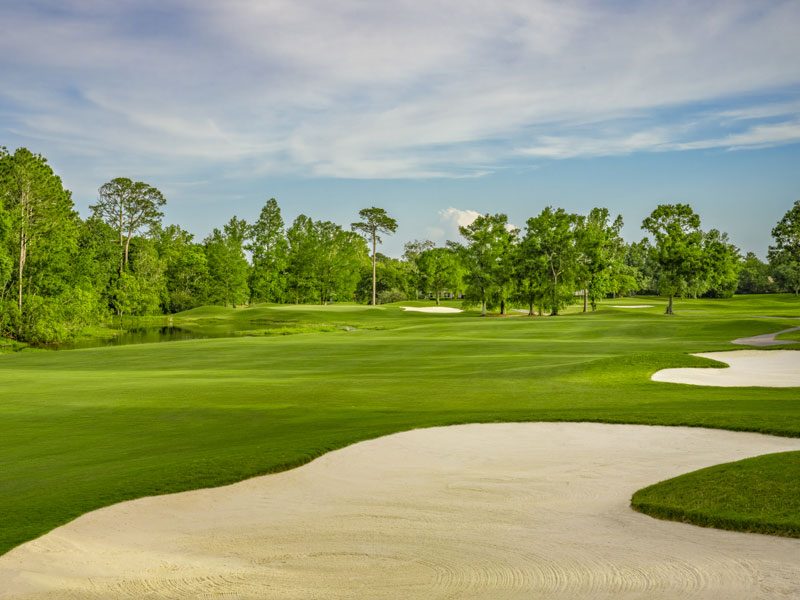
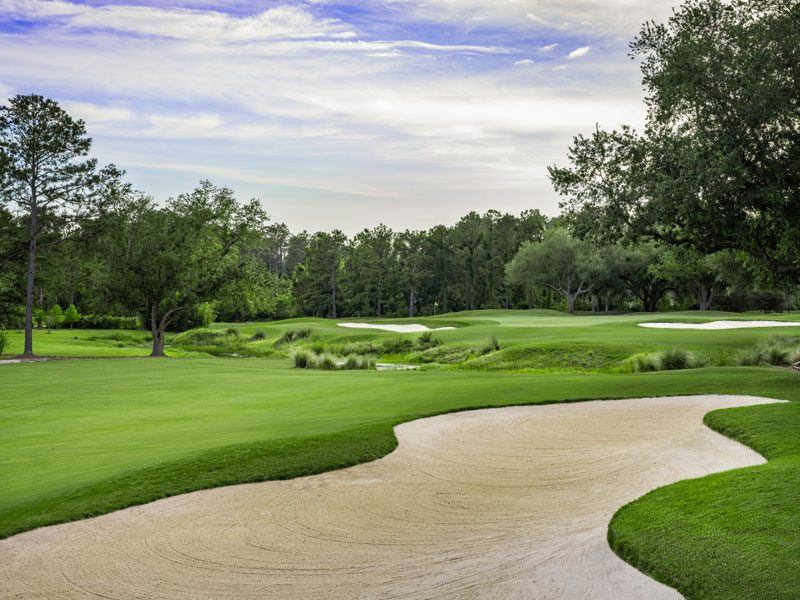
Every course you can play - from an agronomy laboratory ranked No. 1 in the state to a beachfront links on the Gulf, by way of the Robert Trent Jones Golf Trail. Public and semi-private only: if a course will not sell you a tee time, it is not on this list.
15Courses you can play
10On the Robert Trent Jones Golf Trail
262Golf courses statewide
12Courses with photos
Alabama is the state that built itself a golf trail - literally. The Robert Trent Jones Golf Trail, a Retirement Systems of Alabama project begun in the early 1990s, strings 26 public courses across 11 sites from the Tennessee River to the Gulf of Mexico, and 10 of the 15 courses on this list wear its logo. Around that spine, the state spreads a working agronomy laboratory that the panels rank No. 1, a beachfront links on the Fort Morgan peninsula, Jerry Pate designs at both ends of the state, and Arnold Palmer's Gulf Shores originals. The variety is the story: Appalachian foothill golf in the north, river-bluff golf in the middle, dune golf on the coast - across some 262 courses statewide.
How we chose them
Our top ten follows Golfweek's 2026 Alabama public-access panel in order - FarmLinks at Pursell Farms first, the Judge Course at Capitol Hill second - cross-checked against Golf Digest's Best in State list, whose bookable names line up with the panel's, and against GolfPass's 2026 Golfers' Choice list, where everyday golfers also put FarmLinks first. Ranks 11-15 complete the fifteen from the panels' next tier: Oxmoor Valley's Ridge Course, which Golfweek's previously published Alabama list ranked No. 5 in the state; the 8,092-yard Fighting Joe at The Shoals; and the three Alabama courses GolfPass's reviewers rank highest after FarmLinks - Limestone Springs (No. 2), Cotton Creek (No. 4) and Cypress Bend (No. 5). Access calls, stated plainly: every Robert Trent Jones Trail course sells public tee times; FarmLinks and Kiva Dunes are resorts that book golfers with no stay required; and Limestone Springs is the list's one semi-private club. No green fees are published on this page, because Alabama's top end prices dynamically by season and day. No Alabama course is in our national top 25 yet: FarmLinks, GolfPass's No. 50 public course in America, holds the strongest claim, and it is the leading candidate for a future national list.
Access key: Public anyone can book · Resort bookable with a stay or as a resort guest · Semi-private members plus public tee times
FarmLinks at Pursell Farms
Public
Sylacauga - Dr. Michael Hurdzan & Dana Fry (2003)
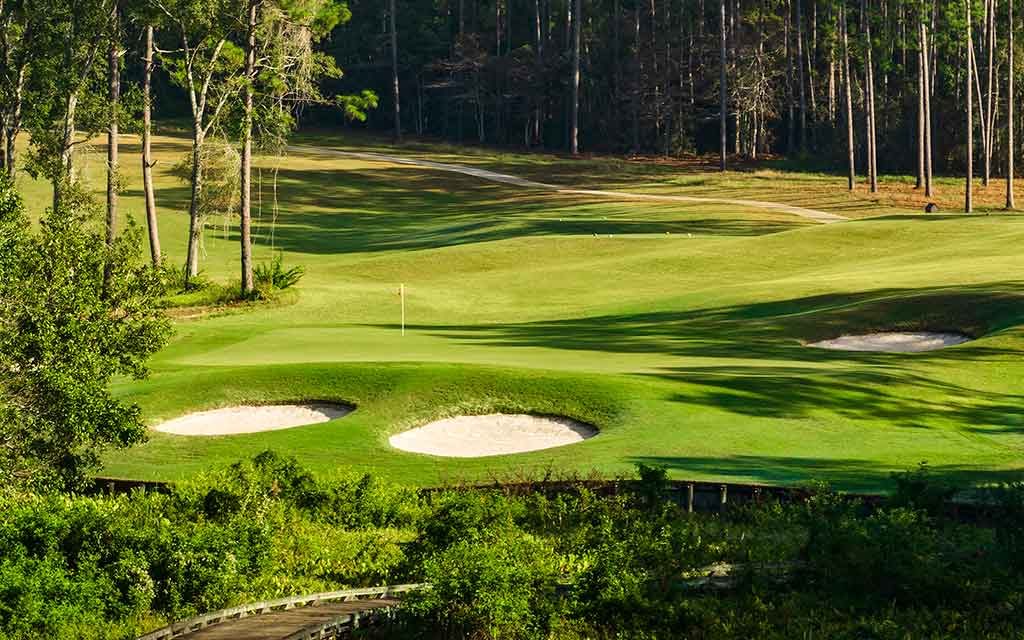
Alabama's consensus No. 1. Golfweek's 2026 public-access panel puts FarmLinks first in the state, and GolfPass's everyday golfers agree - the 2026 Golfers' Choice list ranks it No. 1 in Alabama and No. 50 among all public courses in America. Dr. Michael Hurdzan and Dana Fry opened the course in 2003 on the Pursell family's Sylacauga farm as a working agronomy laboratory, with different grass strains growing side by side across a patchwork of microclimates. The golf more than lives up to the science: 7,444 yards of wide, firm fairways through rolling farmland, capped by the par-3 5th, which drops about 175 feet from tee to green. The resort is there if you want it - the tee sheet is open to everyone.
Capitol Hill (Judge Course)
Public
Prattville - Robert Trent Jones Sr. & Roger Rulewich (1999)
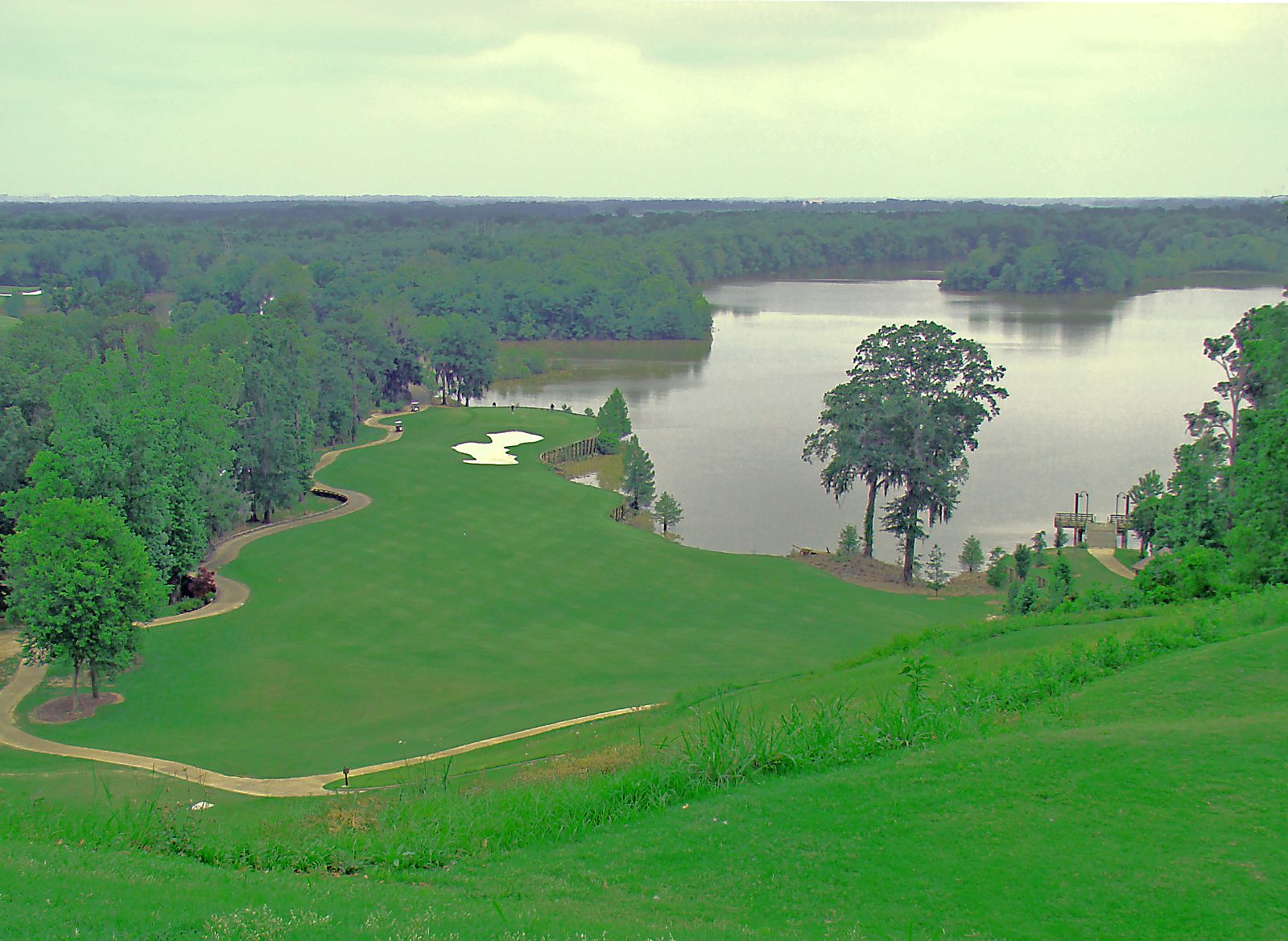
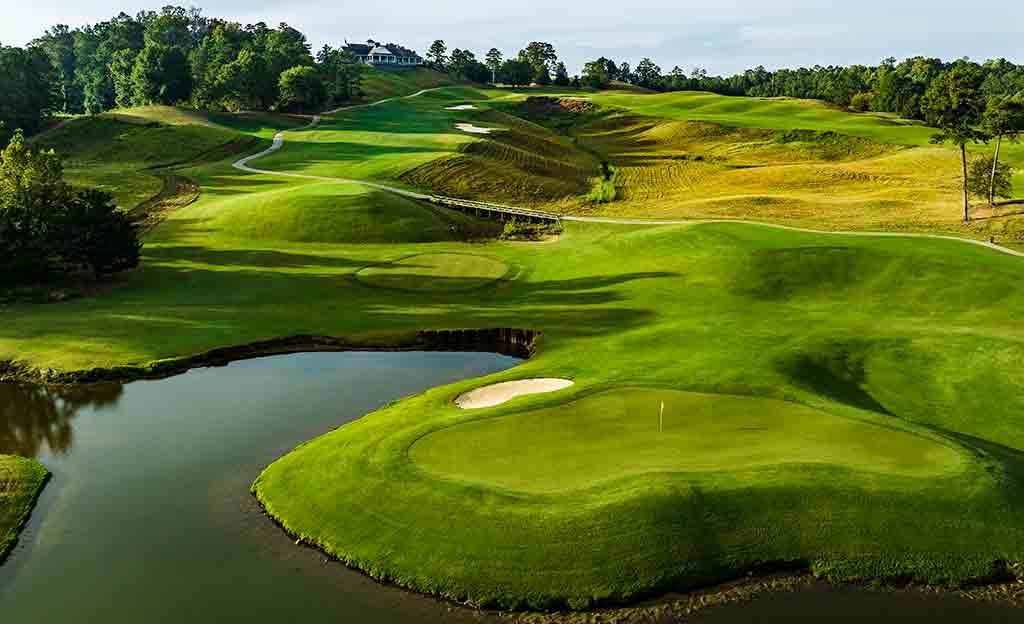
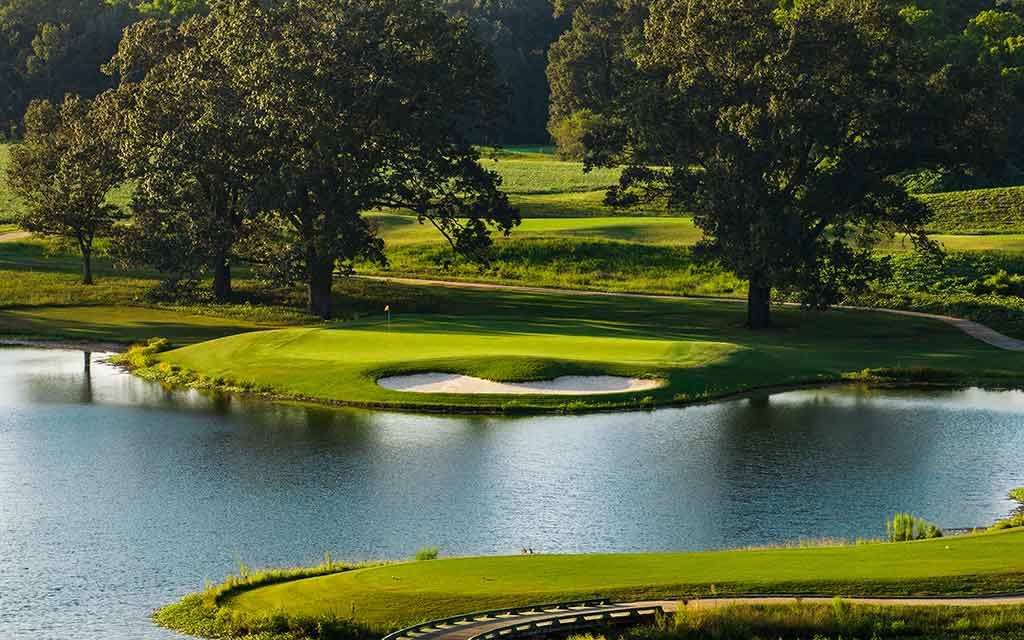
The Trail's signature photograph and, for many golfers, its signature course. The Judge opened in 1999 at Capitol Hill, the 54-hole Prattville complex that was the Trail's eighth site, and its first tee sits some 200 feet above the fairway, with the Alabama River backwaters and the Montgomery skyline spread out below. Fourteen holes run alongside the water, and the par-3 6th plays to a bulkheaded island green. GOLF Magazine once named the Judge one of the 10 public courses in America worthy of hosting the U.S. Open - stand on that first tee and watch a ball fall toward Cooter's Pond, and the case makes itself. Read our course guide.
Grand National (Lake Course)
Public
Opelika - Robert Trent Jones Sr. (1992)
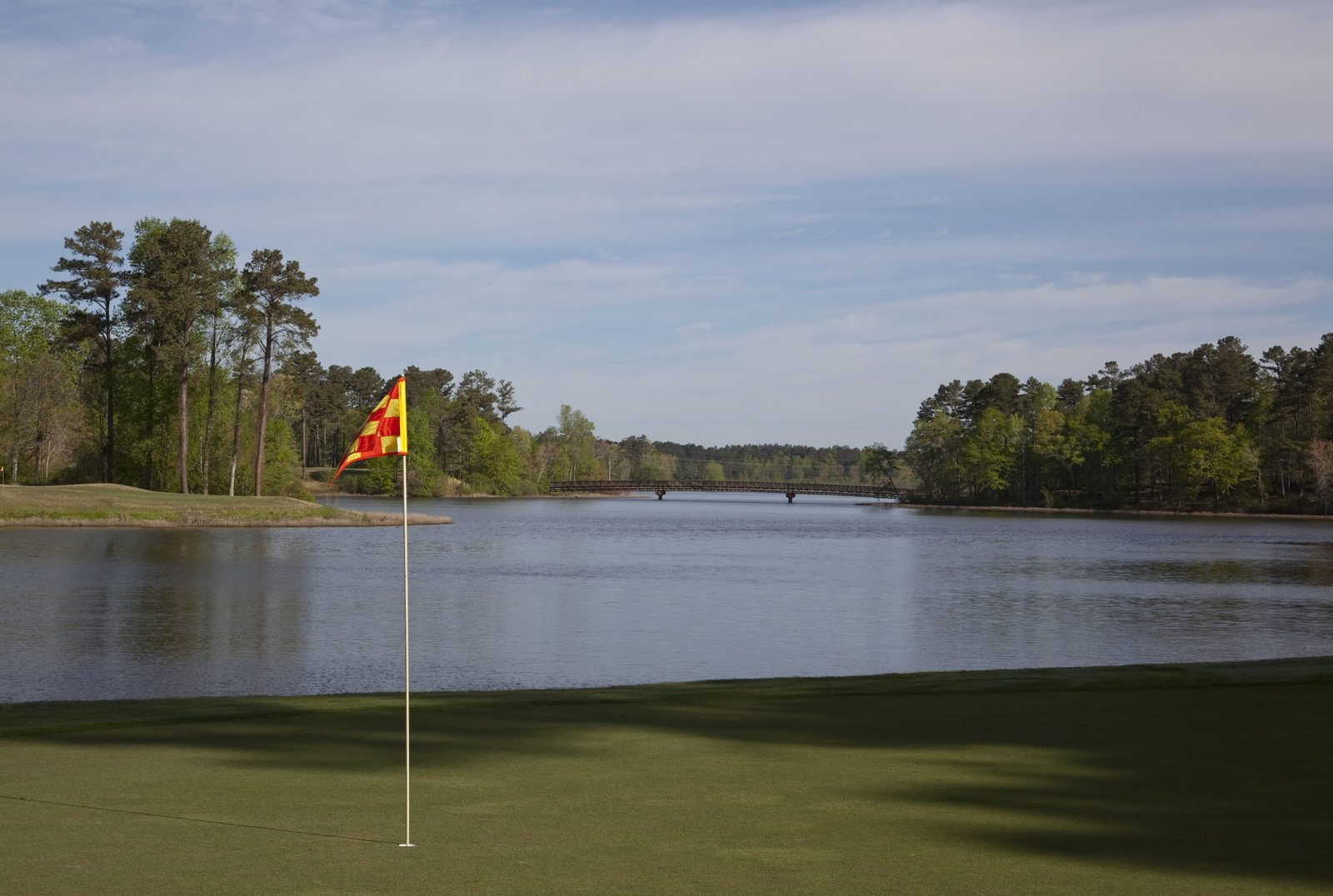
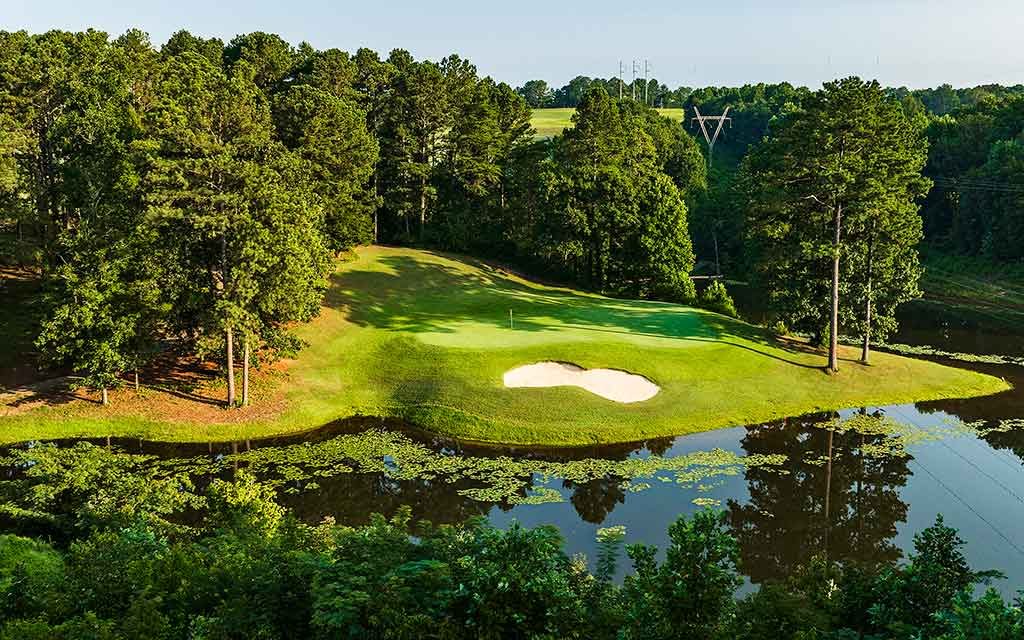
Robert Trent Jones Sr. called Grand National the single greatest natural site for golf he had ever seen, and the Lake Course is the reason. Opened in August 1992 as the Trail's fourth site, it wraps 12 of its 18 holes around the shore of 600-acre Lake Saugahatchee outside Opelika, and its island-green par-3 15th - 230 yards of carry over the water - is regularly called the prettiest hole on the entire Trail. The PGA Tour ratified the assessment: the Barbasol Championship was played here from 2015 to 2017, on a stage that had already hosted NCAA, LPGA and Nike Tour fields. Read our course guide.
Ross Bridge
Public
Hoover - Roger Rulewich & Bobby Vaughan (2005)
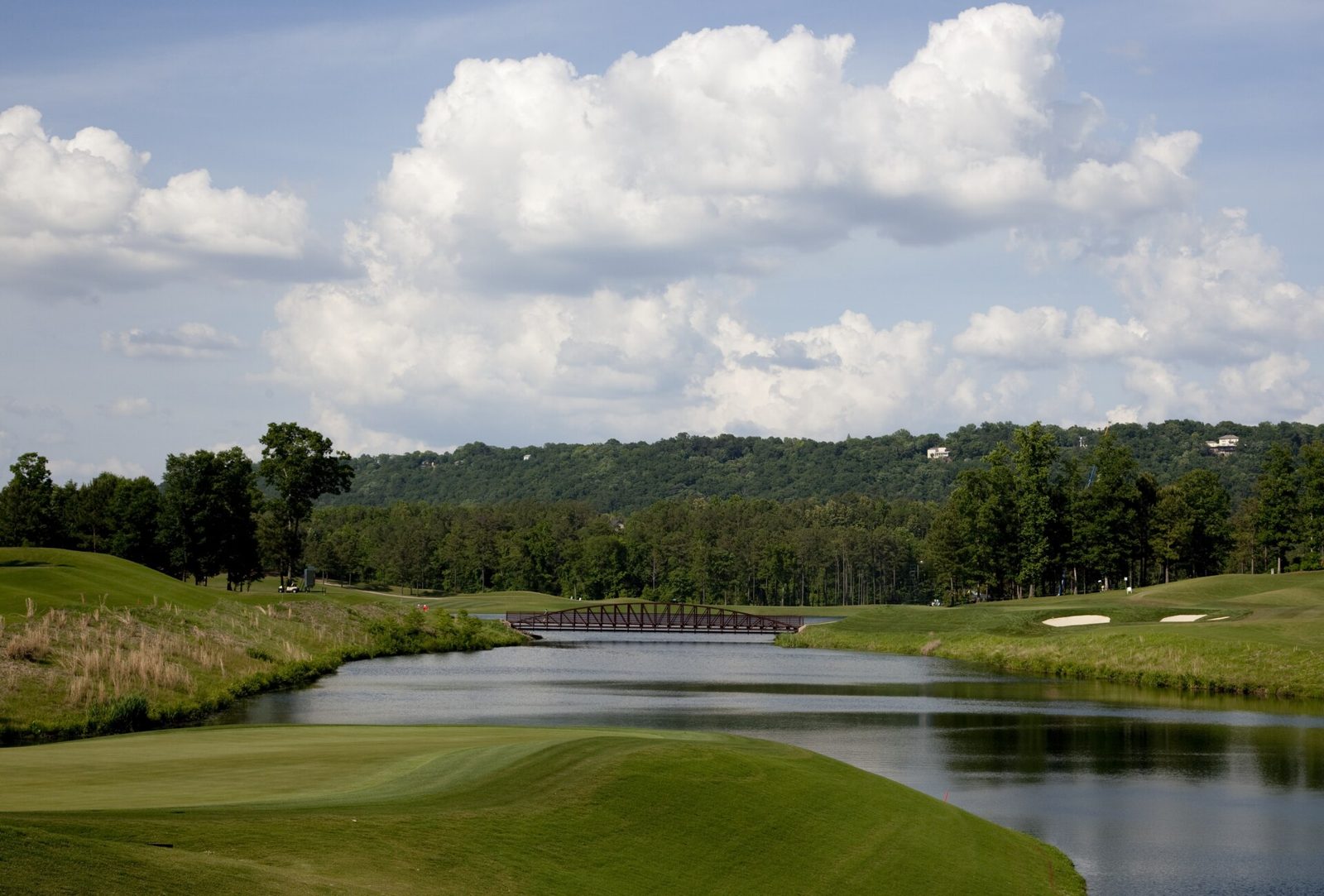
The heavyweight. Ross Bridge opened in 2005 at 8,168 yards from the back tees - a par 72 that stands among the longest golf courses in the world - and it fills every yard with theater: 10 holes play along two lakes joined by an 80-foot waterfall that spills between the 9th and 18th greens, past a grist mill on the spillway. Roger Rulewich and Bobby Vaughan built it for big events, and the PGA Tour Champions' Regions Charity Classic called it home from 2006 to 2010. A full renovation finished in 2023 - every green rebuilt in TifEagle Bermuda, the bunkers restored, four holes transformed - and while the Renaissance resort next door is a pleasure, it is not a requirement: the tee sheet is public. Read our course guide.
Capitol Hill (Legislator Course)
Public
Prattville - Robert Trent Jones Sr. & Roger Rulewich (1999)
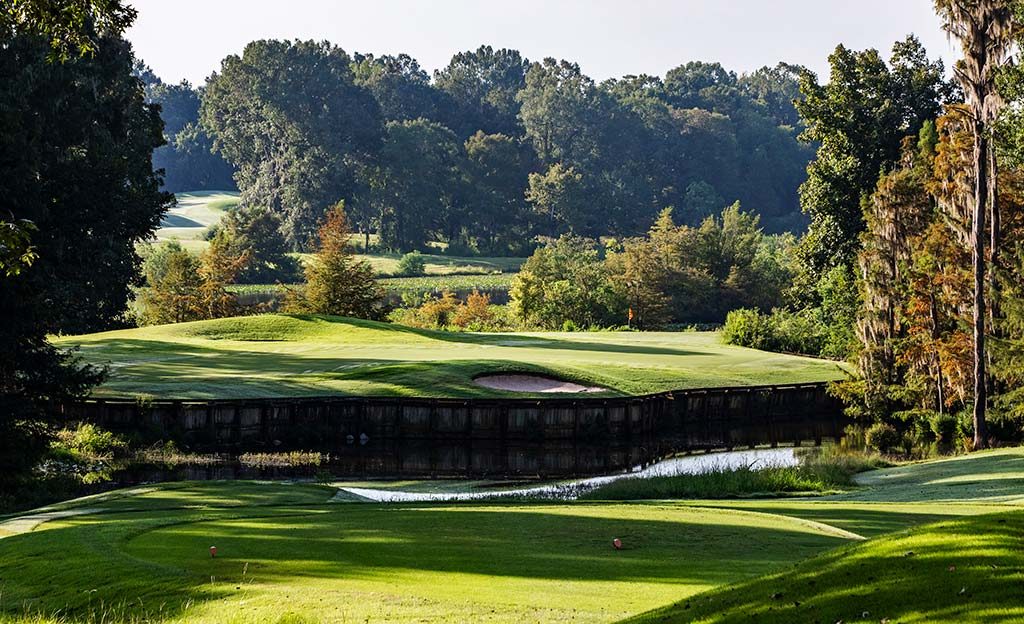
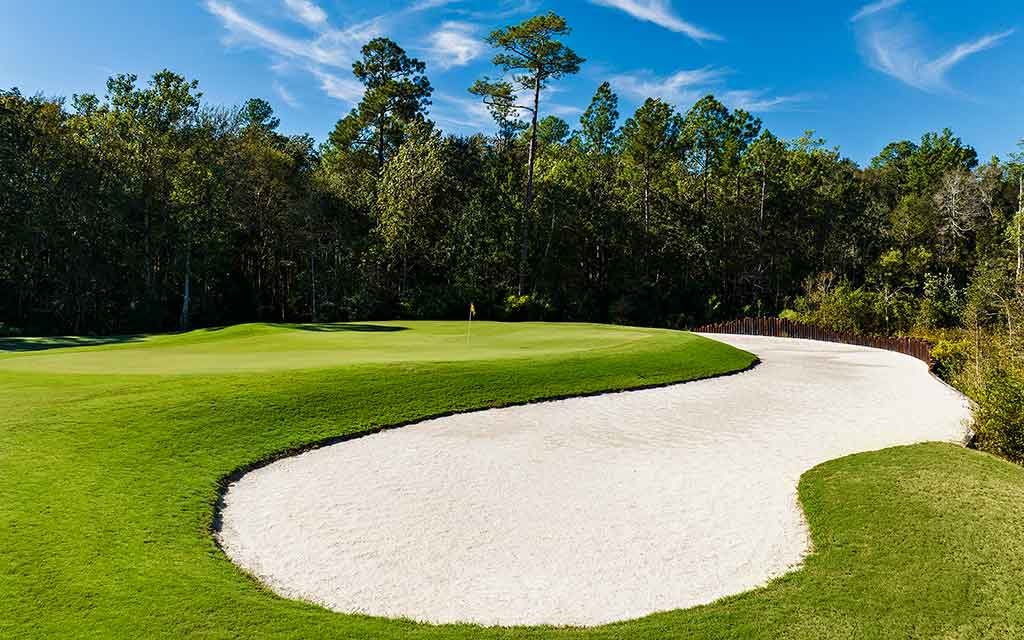
The Judge's traditional sibling at Capitol Hill - and the connoisseur's pick of the three. The Legislator opened with the complex in 1999 and plays a completely different game from its famous brother: a classic parkland routing in and out of pine forest and along the bluff, with six holes threaded through a native cypress swamp. The finish is pure Trail theater, as the Sky Bridge cart path carries you back up the bluff to close at the clubhouse. Where the Judge overwhelms with views, the Legislator charms with shot values - a 36-hole Capitol Hill day needs both. Read our course guide.
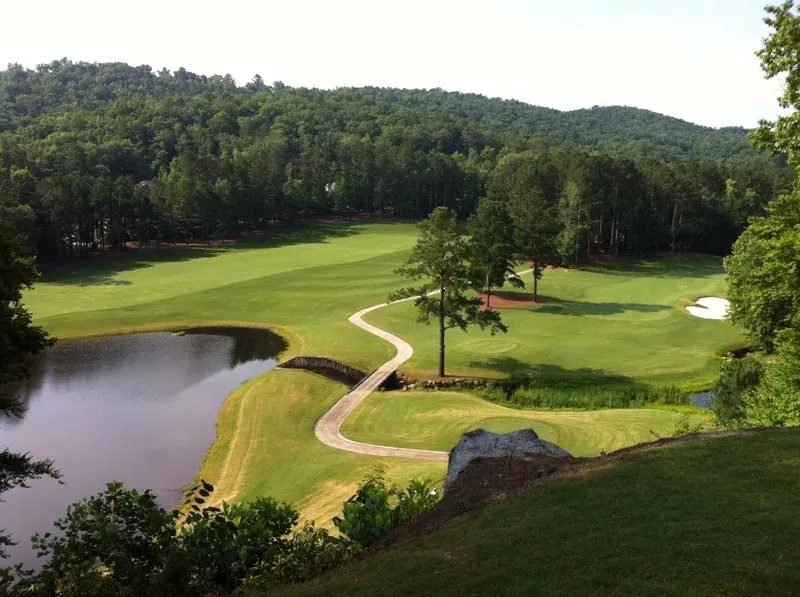
The Trail's southern sleeper, 40 minutes south of Montgomery in Greenville. Cambrian Ridge opened in October 1993 as the Trail's sixth site, and Golf Digest promptly named it the third-best new public course in America. The Sherling nine circles Lake Sherling; the Canyon nine dives through a wooded canyon; and the two 9th holes approach from opposite sides of a gorge barely 50 yards wide to meet at a single double green - one of the great shared-green finishes in public golf. A three-year renovation of the original 27 holes, completed in 2016, polished every edge of it. Read our course guide.
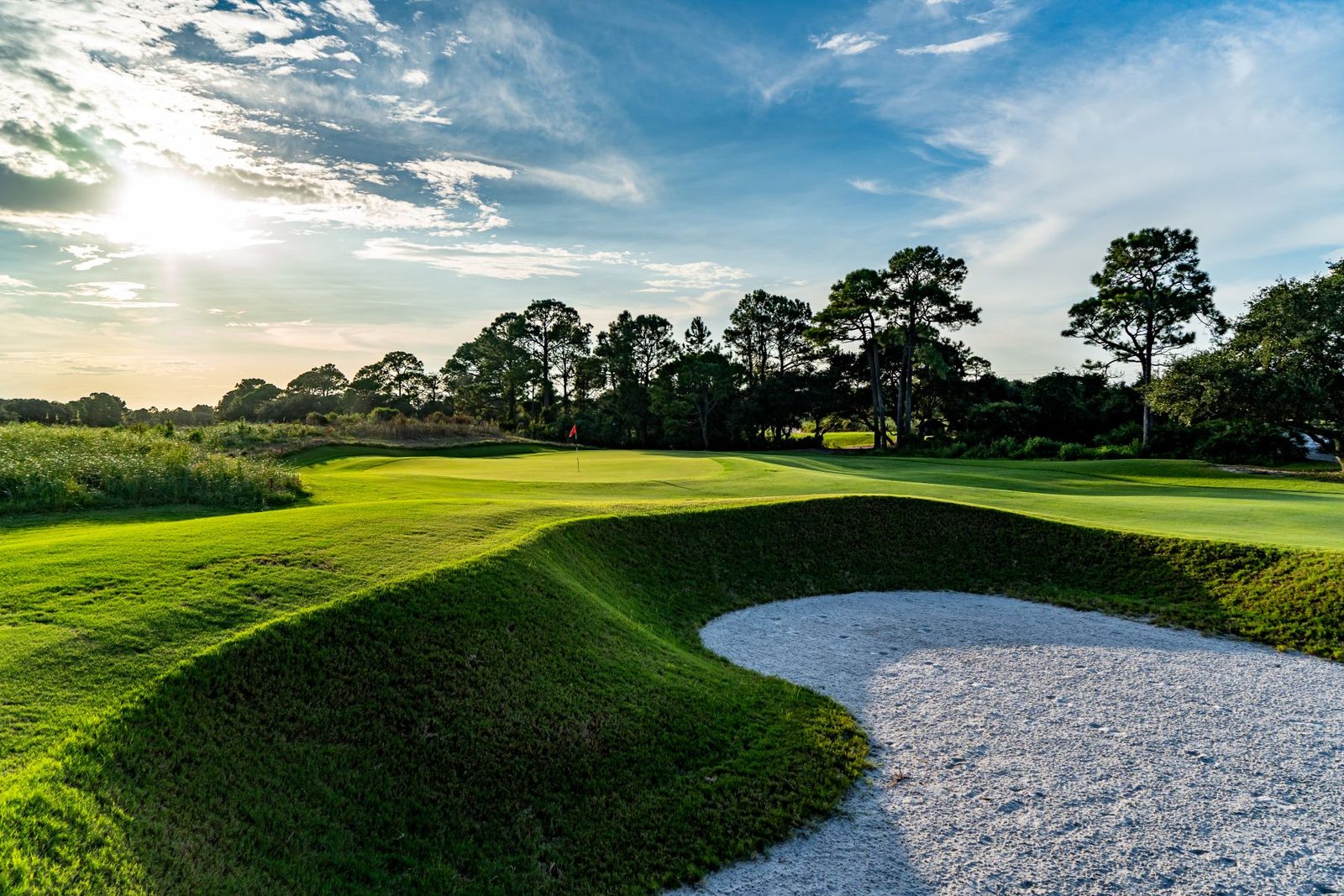
Alabama's only beachfront golf resort, and its one true links. Jerry Pate opened Kiva Dunes in 1995 on the Fort Morgan peninsula in Gulf Shores, routing 7,092 yards through native dunes, lakes and wildlife preserves a short walk from the Gulf of Mexico. The wind is a full-time playing partner, the ground game is alive, and the acclaim was instant - Golf Digest ranked it among America's best new resort courses the year it opened. It remains the Gulf Coast's essential round: seaside golf with a Southern accent, open to every booking golfer. Read our course guide.
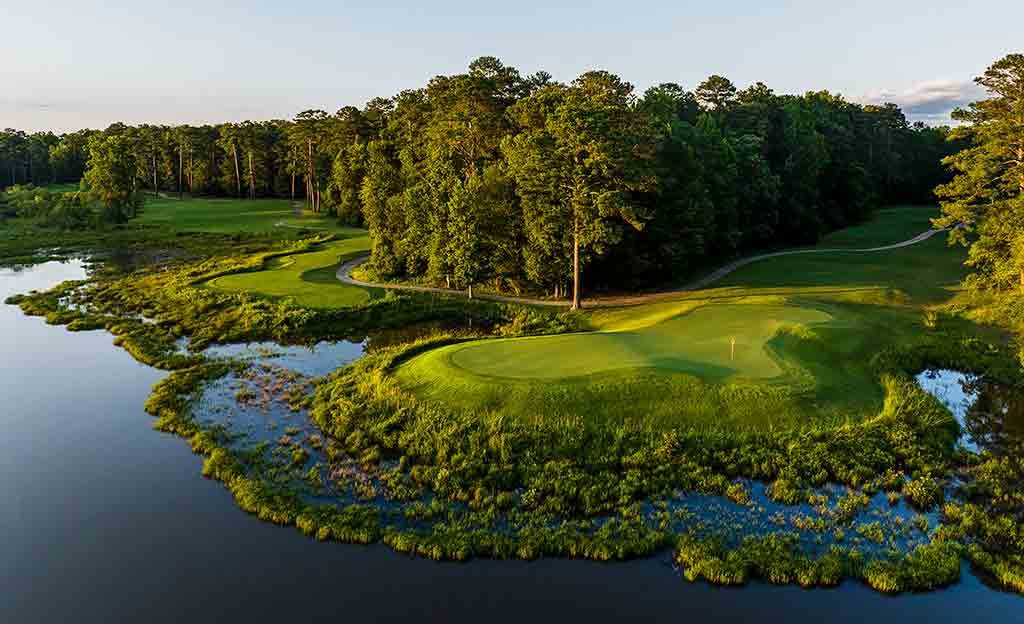
Magnolia Grove opened in June 1992 as the Trail's second site, and the Falls is its championship heart - the only par-71 championship course on the entire Trail. Robert Trent Jones Sr. spread it across 650 acres of Mobile wetlands, creeks, lakes and marshland under slash pines and magnolias, and a renovation completed in 2010 returned it with large, contoured MiniVerde greens and dramatic cloverleaf bunkering. The course takes its name from the small waterfall near the turn - a quiet course with a serious test inside it. Read our course guide.
The cornerstone. The Trail's own guide describes the Links Course as a design without a single weakness, and its par-4 18th - a drive that must carry a corner of Lake Saugahatchee to find a shallow pedestal green - as the strongest finishing hole on the Trail. Opened with the complex in 1992, the Links plays the inland counterpoint to the Lake Course's shoreline show: tighter, more strategic, every bit as beautiful. A recent renovation added new tees and bunkers and converted the greens to TifEagle, and the cornerstone has never looked sharper. Read our course guide.
The Falls' open-air sibling at Magnolia Grove. The Crossings plays hillier, more open parkland than the wetlands golf elsewhere on the property, and it earns its name honestly - the routing crosses the railway tracks twice. It is a proven championship stage, having hosted both the LPGA Tour and the Korn Ferry Tour Championship, and its renovation added crushed oyster-shell waste areas that flash white against the green - a little piece of the Gulf Coast written into the architecture. Read our course guide.
The Next Five
Ranks 11-15 complete the picture: the Trail's founding course in Birmingham, its 8,092-yard giant on the Tennessee River, a semi-private Jerry Pate gem in the foothills, and Arnold Palmer's two Gulf Shores originals. On a long Alabama trip, this is the bench that fills the second half of the itinerary.
Oxmoor Valley (Ridge Course)
Public
Birmingham - Robert Trent Jones Sr. (1992)
Where the Trail began: Oxmoor Valley opened in May 1992 as the Trail's first site, built on former U.S. Steel mining land between Red Mountain and Shades Mountain. The Ridge is the roller-coaster course - steep elevation change throughout, and a par-5 3rd whose green is buttressed by a shelf of exposed shale rock. Golfweek's earlier published Alabama list ranked it No. 5 in the state. Read our course guide.
The Trail's northern giant, opened in August 2004 above Wilson Lake on the Tennessee River and named for Confederate general Joseph 'Fighting Joe' Wheeler. Fighting Joe was the first Trail course to break 8,000 yards - 8,092 from the back tees - in a links style of dunes-like mounds and tall grasses; Travel + Leisure Golf named it one of the top new courses of 2004, and its par-3 18th green overlooks the lake. Read our course guide.
Jerry Pate's foothills gem, opened in 1999 on 225 acres of Appalachian ridges and valleys about 30 miles north of Birmingham, with limestone outcroppings woven through the routing. Golf Digest carried it on its 100 Greatest Public list from 2003 to 2006, and GolfPass's 2026 Golfers' Choice list ranks it No. 2 in all of Alabama - the semi-private steal of this list. Read our course guide.
The course that put Gulf Shores golf on the map: Arnold Palmer opened Cotton Creek in 1987 on the Craft family's sod farm, and 7,127 yards of Palmer golf - wide fairways, bold bunkering, water in all the honest places - has anchored the Alabama Gulf Coast ever since. GolfPass's 2026 Golfers' Choice list ranks it No. 4 in the state. Read our course guide.
Palmer's second Craft Farms course, opened in 1993: the more secluded of the pair, routed through coastal pines, lakes and wetlands on the Craft family's land. Play the two back to back and you have the full Palmer argument for Gulf Shores - GolfPass's everyday golfers rank Cypress Bend No. 5 in Alabama, one spot behind Cotton Creek. Read our course guide.
Peninsula Golf & Racquet Club in Gulf Shores - 27 Earl Stone holes beside the Bon Secour National Wildlife Refuge, and a GolfPass 2026 Editors' Choice pick - leads the next wave, alongside Capitol Hill's Senator, a Scottish-style links with more than 140 pot bunkers, the Highlands course at Hampton Cove in Huntsville, Silver Lakes near Anniston, Highland Oaks in Dothan, the Dogwood and Azalea courses at the Grand Hotel's Lakewood Club in Point Clear, Ballantrae and Cherokee Ridge. Absent on purpose: Shoal Creek, Wicker Point, the Country Club of Birmingham, The Ledges, Old Overton, Vestavia Country Club, Greystone and Turtle Point all sit at or near the top of Golf Digest's overall Alabama list, but they are private clubs that do not sell tee times - and Mulliganist only ranks courses you can actually play.