Pasatiempo
Alister MacKenzie's favorite course - and his American home.
The Case for Pasatiempo
Start with the architect's own verdict. Alister MacKenzie designed Cypress Point and Augusta National, and he still called Pasatiempo his favorite layout - the course he chose to live beside, on the 6th fairway, for the last years of his life. Golf's greatest architect looked at his own portfolio and picked this Santa Cruz hillside. Then consider the punchline: Cypress Point is members-only and Augusta National is the most exclusive invitation in sport, but Pasatiempo is semi-private and sets aside tee times for the public every single day.
That combination - a top-100 golf course in America, arguably the purest surviving example of MacKenzie's art, that anyone can book - is close to unique in American golf. GOLF Magazine ranks it No. 11 on its Top 100 Courses You Can Play list for 2024-2025, and Golf Digest puts it No. 15 among America's greatest public courses and inside its overall 100 Greatest. On our California ranking it sits No. 4, behind only Pebble Beach, Torrey Pines South and Spyglass Hill - and it is the one of the four that is a pure architecture pilgrimage rather than a seaside spectacle.
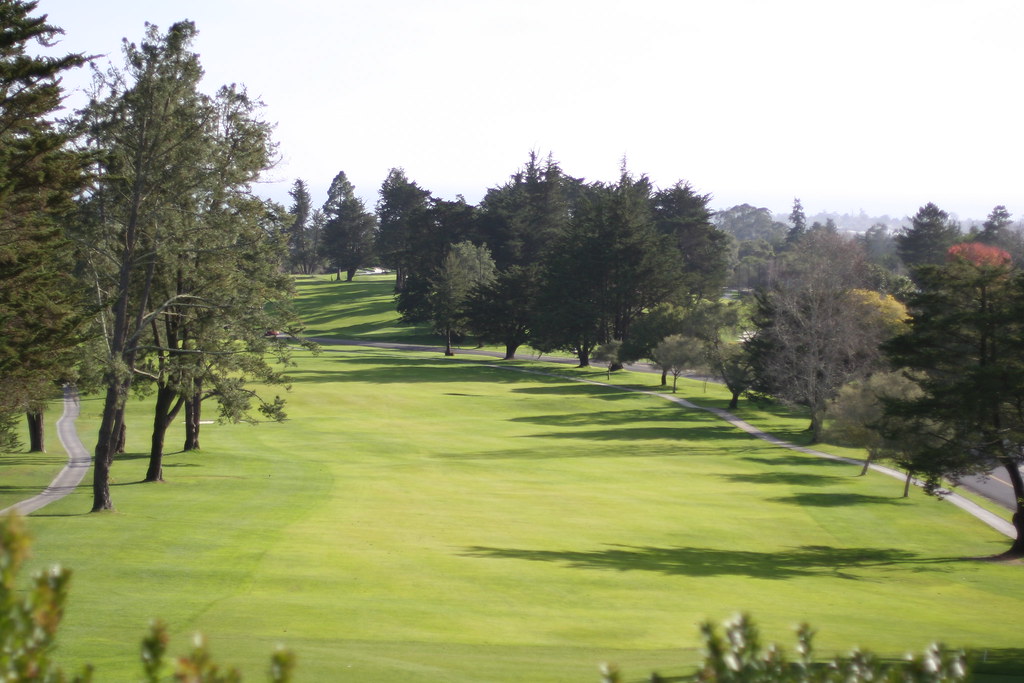
What you get for the pilgrimage is MacKenzie at full power. The site climbs and falls some 300 feet, and he used every tilt of it: the barrancas - steep, sandy ravines - slash across the back nine, the bunkering is carved on a scale that photographs cannot quite capture, and the greens are the boldest set in California, rebuilt in 2023 and 2024 to the contours he drew in the 1930s. At 6,495 yards it is not long. It does not need to be. Par 70 here defends itself with angles, elevation and putting surfaces that turn two-putts into celebrations.
And then there is the walk itself. Bobby Jones played in the first group out in 1929. The Western Intercollegiate has brought the best college players in the world here for 78 years. Two USGA championships have been decided on these greens. Every step of the back nine - which MacKenzie himself reckoned might be the finest nine in existence - you are walking ground that the game's history runs straight through. That is the case: the favorite course of the greatest architect who ever lived, restored to his original intent, and open to anyone who books a tee time.
History: Marion Hollins, Bobby Jones & the Doctor's Home Course
Pasatiempo exists because of Marion Hollins - champion golfer, polo player and developer, and one of the most remarkable figures in American sport. Hollins had helped develop Cypress Point and, as MacKenzie himself credited, talked him into making its 16th hole a par 3. For her own project in the hills above Santa Cruz, she hired MacKenzie again, with the stated intent of building the finest golf course west of the Mississippi.
The course opened on September 8, 1929, with an exhibition match built to stop the sporting world: Bobby Jones - a year away from his Grand Slam season - played in the first group alongside Hollins, U.S. Women's Amateur champion Glenna Collett and British Amateur champion Cyril Tolley, in front of more than 2,000 spectators. Jones left impressed, and the meeting mattered beyond the day itself: when Jones later set out to build a course of his own in Georgia, the architect he chose was MacKenzie. Augusta National traces a line straight back to that September morning at Pasatiempo.
MacKenzie made his American home beside the 6th fairway and lived there until his death in 1934, tinkering with the course he loved most. The decades after were harder: the Depression and the war years squeezed maintenance, bunkers were filled in or altered, greens shrank and tees moved. The bones remained unmistakably MacKenzie, but the details that made them sing slowly faded.
The long restoration came in two acts. First, Tom Doak and Jim Urbina of Renaissance Golf spent roughly a decade bringing back the lost bunkering, green complexes and tees, working from hundreds of period photographs and drawings. Then, in 2023 and 2024, Urbina cored out and rebuilt all 18 greens, fixing drainage and removing decades of buildup, then restoring the contours as closely as possible to the 1930s originals - recapturing hole locations on masterpieces like the 16th and 18th that modern green speeds had made unusable. The Pasatiempo a visitor plays today is the closest thing to MacKenzie's 1929 original that has existed in generations.
Signature Holes
Hole 11 - Par 4, 390 yards
The back nine at Pasatiempo is a barranca tour, and the 11th is its signature crossing. The hole climbs steadily uphill - everything on this side of the course climbs - and the approach has to carry a deep, diagonal ravine that cuts between fairway and green. A handsome bridge spans the barranca, and standing on it, looking back down the fairway and up at the green, is one of the great mid-round views in California golf.
The shot itself is the exam. The green slopes hard, and the carry over the barranca has to be judged on a hole that plays at least a club longer than its 390 yards because of the climb. Come up short and the ravine collects you; fly it long and the ground behind the green leaves a chip back that nobody wants. The play is one extra club, aimed at the fat of the green - and a par here, on a hole the architecture writers count among the finest on the course, earns a genuine nod on the next tee.
Hole 16 - Par 4, 392 yards
MacKenzie called the 16th the best two-shot hole he knew, and he designed a few you may have heard of. The tee shot is blind, played over a crest on a humpbacked dogleg that tilts toward the barranca. Then the hole reveals itself: the approach plays back across that ravine to a green set in the sky - elevated, fiercely contoured and guarded by a false front and a restored bunker that is stunningly rugged.
And reaching the green is only half the assignment. The putting surface has three tiers, rebuilt in 2023-2024 to the original contours, and a putt from the wrong tier - or worse, from above the hole - is one of the most defensive exercises in golf. Regulars treat a two-putt from anywhere on this green as a win and a three as no disgrace. Play the approach to finish below the hole at almost any cost, even if it means taking one less club and accepting a longer first putt. This is the hole visitors describe in the parking lot.
Hole 18 - Par 3, 173 yards
Pasatiempo closes the way very few great courses dare to: with a par 3. The 18th is 173 yards, virtually all of it carry across the barranca, to a green ringed by MacKenzie's restored bunkering with the clubhouse terrace waiting behind it. One swing, in front of an audience, with the whole round on it. Courses that finish on a par 3 and pull it off this well can be counted on one hand - Pasatiempo's belongs in that company on merit.
The restored green is a character in itself: the 2023-2024 rebuild brought back hole locations that slope had made unusable for years, so a Sunday pin can now sit in places that demand a fully committed shot over the ravine's edge. The miss to avoid is short - the barranca does not give balls back. Take the extra half-club, aim at the middle, and let the terrace see a green in regulation. Par here, with drinks waiting thirty paces away, is one of California golf's great finishes.
The Scorecard
The championship card: par 70, 6,495 yards, rating 72.5, slope 141. The par is built unusually - five par 3s and only three par 5s - which is why a course under 6,500 yards has defended itself against elite amateurs for nearly a century.
| Front nine | Par | Yards |
|---|---|---|
| Hole 1 | 4 | 458 |
| Hole 2 | 4 | 430 |
| Hole 3 | 3 | 222 |
| Hole 4 | 4 | 378 |
| Hole 5 | 3 | 190 |
| Hole 6 | 5 | 567 |
| Hole 7 | 4 | 347 |
| Hole 8 | 3 | 176 |
| Hole 9 | 5 | 492 |
| Total | 35 | 3,260 |
| Back nine | Par | Yards |
|---|---|---|
| Hole 10 | 4 | 437 |
| Hole 11 | 4 | 390 |
| Hole 12 | 4 | 371 |
| Hole 13 | 5 | 532 |
| Hole 14 | 4 | 426 |
| Hole 15 | 3 | 142 |
| Hole 16 | 4 | 392 |
| Hole 17 | 4 | 372 |
| Hole 18 | 3 | 173 |
| Total | 35 | 3,235 |
From the middle tees the course plays 6,093 yards (rating 70.8, slope 134), and that is the right call for most visitors: the barranca carries stay dramatic, the greens stay every bit as bold, and the 300 feet of climbing feels friendlier. Nobody's Pasatiempo story is about the tee they played. It is about the 11th, the 16th, and the walk back across the bridge at the 18th.
How It Plays
The through-line at Pasatiempo is elevation. The site rises and falls around 300 feet, the fairways tilt, and almost every approach plays uphill or downhill to a green that tilts with its own agenda. Then MacKenzie's greens take over: big, boldly contoured surfaces where position below the hole is the whole game. The good news is that the 2023-2024 rebuild means those contours are now the ones he actually drew - the challenge is authentic, not accidental.
Single figures
You can attack here, but only in the right places. The three par 5s (6, 9 and 13) are the scoring holes; the barranca holes (10, 11, 12, 15 and 16) are where rounds are protected. On the 16th, play to the correct tier even if it means a 30-foot putt - a putt from the wrong tier is a bogey waiting to happen. And never leave yourself above the hole on these greens and call it an opportunity.
Mid handicaps (10-20)
Play the middle tees and club the elevation honestly - the uphill approaches on holes like 9, 11 and 17 play a full club longer than the number on the card. On the barranca approaches, take one more club and aim center-green: the penalty for short is total, while the penalty for a little long is usually a playable chip. Around the greens, get the ball rolling early; these contours punish the floating wedge.
High handicaps (20+)
From the forward tees the carries shrink and the architecture still shines. On the holes where the barranca crosses - 10, 11, 16 and the tee shot at 18 - it is perfectly good strategy to lay back short of it and play three sensible shots. Budget a few balls for the ravines, walk the bridge at 11 slowly, and save something for the climb home: the closing stretch all plays uphill.
One last piece of craft: putt defensively from above the hole and aggressively from below it. Pasatiempo's rebuilt greens are kept at speeds chosen to honor MacKenzie's contours rather than fight them - which means a putt from the wrong side of the 16th will gently remind you whose golf course this is.
Practical Info
Pasatiempo is semi-private: members share the course with public guests, and the club sets aside tee times for public play every day. Those public times are the most in-demand in Santa Cruz County, so book through the club website or golf shop as early as your plans allow.
Budget $470 for the green fee - the figure in Golf Digest's current course listing, checked in October 2026; confirm the day's rate when you book, as premium times can vary. Santa Cruz sits about an hour north of the Monterey Peninsula, which makes Pasatiempo the perfect opening or closing round of a Pebble Beach trip: MacKenzie in the hills, the ocean in the afternoon, and a story about the 16th green that your Pebble stories will have to compete with.
| Detail | Info |
|---|---|
| Green fee | $470 (Golf Digest course listing, checked October 2026) |
| Access | Semi-private - public tee times set aside daily |
| Designer | Alister MacKenzie (1929); restorations by Tom Doak & Jim Urbina, greens rebuilt 2023-2024 |
| Championship card | Par 70, 6,495 yards, 72.5 rating / 141 slope |
| Host events | Western Intercollegiate (78 years); 1986 U.S. Women's Amateur & 2004 U.S. Senior Women's Amateur |
| Location | 20 Clubhouse Road, Santa Cruz, California |
Verdict
Worth it? 9.4/10
Yes - and for architecture lovers, it belongs near the very top of the California list. Pebble Beach has the ocean and Spyglass Hill has the exam, but Pasatiempo has the purest MacKenzie in America: the boldest greens in the state, the barranca back nine he called the finest in existence, and a restoration that has put his 1929 intent back under your spikes. At $470 it is a serious splurge - and it is the rare one where golfers walk off the 18th green already planning the return trip.
Pasatiempo FAQs
How much does it cost to play Pasatiempo?
Golf Digest's current course listing prices the green fee at $470, checked in October 2026. Rates can vary by day and time, so confirm when you book. It is a splurge - but set it against the neighborhood: Pebble Beach is $695 and Spyglass Hill starts at $550 for resort guests, and neither of those is the architect's favorite work.
Can the public play Pasatiempo, or is it members only?
The public can play. Pasatiempo is a semi-private club that sets aside tee times each day for public play - book through the club's website or golf shop. Public times are limited each day, so book as early as you can.
Who designed Pasatiempo?
Alister MacKenzie, in 1929, for developer and champion golfer Marion Hollins. MacKenzie lived beside the 6th fairway until his death in 1934 and considered it his favorite layout. Tom Doak and Jim Urbina led a decade-long restoration of the bunkers and green complexes, and Urbina rebuilt all 18 greens to their 1930s contours in 2023-2024.
What are the signature holes at Pasatiempo?
The 11th, a 390-yard par 4 whose approach carries a diagonal barranca; the 16th, MacKenzie's favorite two-shot hole, a 392-yard par 4 to a three-tiered green in the sky; and the 18th, a rare par-3 finisher of 173 yards played entirely over the barranca in front of the clubhouse terrace.
When is the best time to play Pasatiempo?
Santa Cruz golf is a year-round proposition, and the course hosts the Western Intercollegiate each spring. Coastal mornings can start cool and grey before the sun breaks through, so a late-morning tee time often gets the best of the day. Pair it with a Monterey trip - Pasatiempo is about an hour north of Pebble Beach.
Keep Exploring California
Read our California Golf Guide for more top courses, green fees, and trip planning across the state.
Pasatiempo also features in our ranking of the 20 Best Golf Courses in California.