Firestone Country Club (South Course)
The Monster of Akron, 7,400 yards of par-70 championship muscle that hosted three PGA Championships and eight Tiger Woods victories.
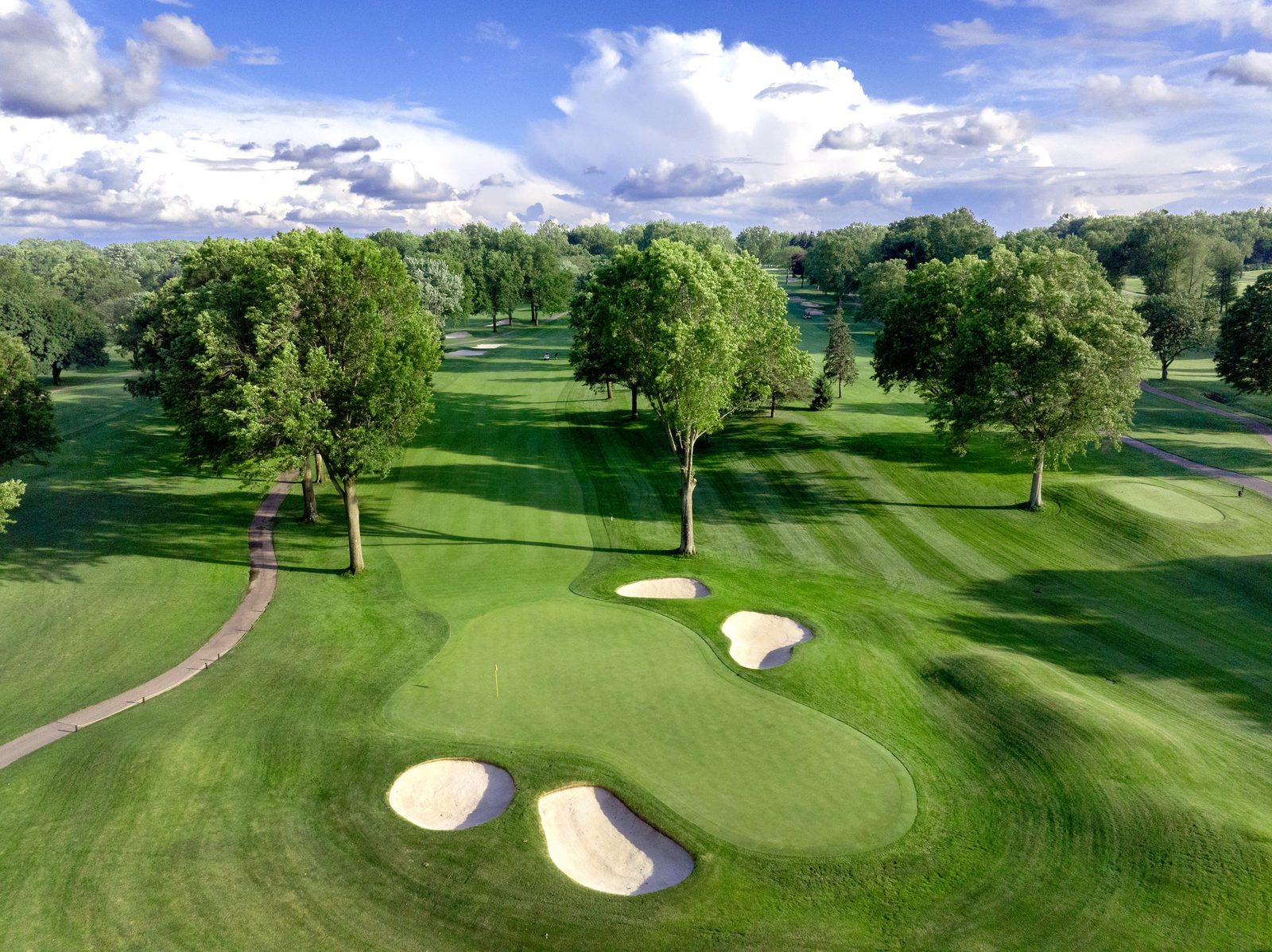
Every golfer knows this walk, even if they have only seen it on television. Firestone's South Course is American tournament golf's old heavyweight, a 7,400-yard par 70 in Akron where the fairways run straight and tree-lined between walls of hardwoods and every hole seems to ask the same question at higher volume. Hit it long, hit it straight, then do it again. We rank it first among Ohio courses you can play, with the access caveat stated plainly below, and Golfweek's panel puts it first in the state as well.
The numbers carry the menace honestly. A rating of 76.1 and a slope of 132 from the back tees, five par 4s beyond 460 yards, and a closing stretch that saves its worst for the 667-yard 16th, the hole Arnold Palmer named The Monster. There is no water carnival and no trickery. Robert Trent Jones Sr. rebuilt Bert Way's 1929 course for the 1960 PGA Championship with more than 50 bunkers and two ponds, and the examination he set has been administered to the game's best ever since, at three PGA Championships and through the long World Golf Championships era when Tiger Woods won here eight times.
Access is the part to read carefully, because Firestone is not a normal resort course. This is a private club. There is no public tee sheet, no day rate and no walk-up golf. Non-members get on through the club's Stay and Play packages, lodging included, and that is the only door. We include the South Course because that door is genuinely open to any golfer willing to book it, but it opens on the club's terms, and this page will not pretend otherwise.
The Scorecard
The card below shows the back set, listed as Tee 1 on the club's official hole-by-hole tour, which publishes the same totals in its course information line. It plays 7,400 yards at par 70, rated 76.1 with a slope of 132, and it foots exactly, 3,702 yards out and 3,698 back. Par 70 at this length is the tell. There are only two par 5s on the entire card, so the yardage is carried by par 4s, twelve of them, and the scorecard reads like a list of demands.
By the Numbers
From the scorecard below: Back tees (Tee 1).
Slope 132 from the Back tees (Tee 1), rating 76.1 - harder than about 15% of the 182 courses in our database with a published slope.
| Front nine | Par | Yards |
|---|---|---|
| Hole 1 | 4 | 399 |
| Hole 2 | 5 | 526 |
| Hole 3 | 4 | 442 |
| Hole 4 | 4 | 471 |
| Hole 5 | 3 | 200 |
| Hole 6 | 4 | 469 |
| Hole 7 | 3 | 219 |
| Hole 8 | 4 | 482 |
| Hole 9 | 4 | 494 |
| Total | 35 | 3,702 |
| Back nine | Par | Yards |
|---|---|---|
| Hole 10 | 4 | 410 |
| Hole 11 | 4 | 418 |
| Hole 12 | 3 | 180 |
| Hole 13 | 4 | 471 |
| Hole 14 | 4 | 467 |
| Hole 15 | 3 | 221 |
| Hole 16 | 5 | 667 |
| Hole 17 | 4 | 400 |
| Hole 18 | 4 | 464 |
| Total | 35 | 3,698 |
Read the card for its rhythm and there is barely any. The par 3s are the only short breaths, and two of them still stretch past 200 yards. The 16th at 667 is the longest par 5 most golfers will ever attempt, and it arrives after the 467-yard 14th and the 221-yard 15th have already taken their toll. Five sets of tees step the course down for mortals, and the club's Stay and Play guests overwhelmingly play the forward sets, because the back markers at Firestone are not a vanity choice. They are a professional examination that happens to let visitors sit for it.
Green Fees
- LocationAkron, Ohio
- Par / Yardage70 / 7,400 yards (Back tees (Tee 1))
There is no green fee to list, and that is the honest headline. Firestone is a private club, and it does not sell public tee times or publish a standalone rate for the South Course. Non-members play only by booking one of the club's Stay and Play packages, which bundle lodging at the club with rounds on its three courses, and the club's own package page shows the itineraries without prices, because booking runs through its reservations team on quote. Published figures from solid secondary sources give the shape of it. Cleveland Magazine's September 2025 feature put peak-season packages from $980 for one night and two rounds up to $1,950 for three nights and three rounds, with a premium to play the South, and fall packages from $430 to $800. Treat any per-round Firestone price you see elsewhere as invented. It does not exist.
The Story
The South Course opened on August 10, 1929, built by Bert Way for the Firestone Tire and Rubber Company's employees on Harvey Firestone's estate ground, which tells you something about industrial Akron's golden age. The course found its modern form in 1960, when Robert Trent Jones Sr. rebuilt it for the PGA Championship, lengthening it, adding more than 50 bunkers and two ponds, and creating the test that Jay Hebert won that summer. The PGA Championship returned in 1966, when Al Geiberger won, and in 1975, when Jack Nicklaus beat Bruce Crampton in his home state.
The tournament lineage then ran through the World Series of Golf into the World Golf Championships era, and Firestone became Tiger Woods's personal office. He won eight times on the South Course, a run that included the 2000 NEC Invitational and its defining image, the 8-iron he struck in near darkness on the 72nd hole to within two feet, a shot the club still celebrates. The WGC era ended when the event moved away after 2018 and the Senior Players Championship carried the tournament flag into the 2020s. The course itself never softened. At 7,400 yards of par 70 it remains one of the longest examinations in American golf relative to its par, a monument to the straight ball.
Signature Holes
Hole 16 - Par 5 - 667 yards
The Monster, and the nickname is a primary source. Arnold Palmer took a triple bogey here during the 1960 PGA Championship and named the hole on the spot. At 667 yards from the back tees it is one of the longest par 5s in championship golf, a sweeping hole where the length is only half the problem, the pond guarding the approach turning a tired third shot into a held breath. The club's own hole tour text says the hole plays at 675 yards in its pro tip while its tee listing gives 667, the figure that foots to the published 7,400 total, and that small internal quarrel only adds to the legend.
Hole 18 - Par 4 - 464 yards
The finisher, and the site of the most famous shot ever hit in the dark. In the fading light of the 2000 WGC-NEC Invitational, Tiger Woods, already clear of the field, chose to finish rather than return Monday and struck an 8-iron from 168 yards to within two feet, the ball picked out by camera flashes as the gallery erupted. At 464 yards uphill to a guarded green it is a stern par 4 in daylight. In memory it is something else entirely.
Hole 9 - Par 4 - 494 yards
The longest par 4 on the card closes the front nine, and it distills the South Course argument into one hole. No water, no gimmick, just 494 yards of tree-lined insistence, the sixth consecutive hole of a front nine that goes out in 3,702 yards and never once drops its guard. Golfers talk about the Monster and the finisher. The regulars know the round is usually lost somewhere in this honest, exhausting stretch first.
Straight, Long, Then Longer Still
Par tells the Firestone story before yardage gets a chance. At 7,400 yards for par 70, with a rating of 76.1 and a slope of 132, the South Course carries its length on twelve par 4s and just two par 5s, so almost every hole demands a long and straight drive followed by a long and straight approach. Five par 4s stretch beyond 460 yards, the two nines balance at 3,702 yards out and 3,698 home, and the par 3s provide the only short breaths on the card, with two of them still stretching past 200 yards. There is barely any rhythm to hide in. The question simply repeats at higher volume.
Robert Trent Jones Sr. set that examination in 1960 by adding more than 50 bunkers and two ponds to Bert Way's 1929 course, and the fairways still run straight between walls of hardwoods with no water carnival and no trickery to blame. The 494-yard 9th, the longest par 4 on the card, distills the argument into a single hole, closing a front nine that never once drops its guard. Regulars will say a round here is usually lost somewhere in that honest and exhausting stretch, long before the famous holes get their turn to collect.
Those famous holes collect plenty. The 667-yard 16th, named The Monster by Arnold Palmer after a triple bogey there during the 1960 PGA Championship, saves the longest par 5 most golfers will ever attempt for deep in the back nine, with a pond guarding the approach so that a tired third shot becomes a held breath. The 464-yard 18th then finishes uphill to a guarded green, stern in daylight and legendary in memory. Golfers who drive it long and straight, repeatedly and without drama, get rewarded at Firestone South as almost nowhere else. Anyone whose ball bends into the tree lines finds a course with very few places to recover, which is exactly the point of the place.
Practical Info
Firestone Country Club is at 452 East Warner Road in Akron. There is no public booking engine and no day rate. The only route for a non-member is the club's Stay and Play program, sold spring through fall, which packages on-site lodging with golf on the club's three courses, the South, the North and the West. The club's current package page lists its Buddies, Ultimate Buddies and Champions itineraries without prices and routes booking through the Firestone reservations team, so expect a quote rather than a rate card. Cleveland Magazine's 2025 feature is the best published guide to cost, peak packages from $980 to $1,950 per person depending on nights and rounds, with a premium for the South Course and fall packages from $430.
Plan the visit as a pilgrimage rather than a tee time. The South is the mandatory round, the one with the Monster and Woods's 18th, and the package structure means the other courses come with it, which is no hardship. Akron puts the course about 40 minutes south of Cleveland, an easy add to a northern Ohio trip that might also take in Manakiki and Fowler's Mill from our Ohio ranking. Go in the fall if the budget matters, when the hardwoods are turning, the package prices ease, and the course plays at its most beautiful and most honest.
Questions, Answered
Can the public play Firestone's South Course?
Only through the club's Stay and Play packages. Firestone is a private club, and its own FAQ is direct about it. Access is for members and their guests, and Stay and Play packages are available for non-members. There is no public tee sheet, no standalone green fee and no walk-up play. A non-member books a lodging package through the club's reservations team and plays the South as part of it.
How much does it cost to play Firestone South?
There is no per-round price, because no per-round product exists. The club publishes its Stay and Play itineraries without prices and quotes through its reservations team. The best published guide is Cleveland Magazine's September 2025 feature, which put peak-season packages from $980 for one night and two rounds to $1,950 for three nights and three rounds, with a South Course premium, and fall packages starting in the $430 to $800 range.
Why is the 16th hole at Firestone called The Monster?
Arnold Palmer named it. During the 1960 PGA Championship, the first played on Robert Trent Jones Sr.'s rebuilt South Course, Palmer took a triple bogey on the 667-yard par 5 and called it a monster, and the name became official. At 667 yards from the back tees, with a pond guarding the approach, it remains one of the longest and most feared par 5s in championship golf.
How many times did Tiger Woods win at Firestone?
Eight times on the South Course during the World Golf Championships era, the most famous being the 2000 NEC Invitational, where his 8-iron to two feet on the 72nd hole in near darkness, the Shot in the Dark, became one of the iconic images of his career. His dominance here is a central part of the course's modern legend, alongside its three PGA Championships in 1960, 1966 and 1975.
Keep Exploring Ohio
Read our Ohio Golf Guide for more top courses, green fees, and trip planning across the state.
Firestone Country Club (South Course) features in our ranking of the 15 Best Golf Courses in Ohio.
More course guides: Pinehurst No. 2, Bandon Dunes and TPC Sawgrass - Stadium Course.